
RETON Ring Mesh Co., Ltd.A Professional, Reliable And Experienced Metal Products Manufacturer
+86-18632192156 sales@rt-ringmesh.com

A chainmail butchers glove is a specialized hand protection solution designed for professionals working with knives, blades, and cutting equipment. Unlike general chainmail gloves, butcher gloves focus on precision grip, ergonomic control, and repeated cutting tasks, making them a key tool in meat processing environments.
This guide takes a deeper look at structure, safety performance, material engineering, and real-world usage scenarios, providing a more technical and application-focused perspective to avoid overlap with general glove introductions.
A chainmail butchers glove is a cut-resistant glove made from interlocking stainless steel rings, designed specifically for:
Meat deboning
Filleting and trimming
Poultry processing
Fish processing
Its primary function is to reduce the risk of severe hand injuries caused by sharp knives during repetitive cutting operations.
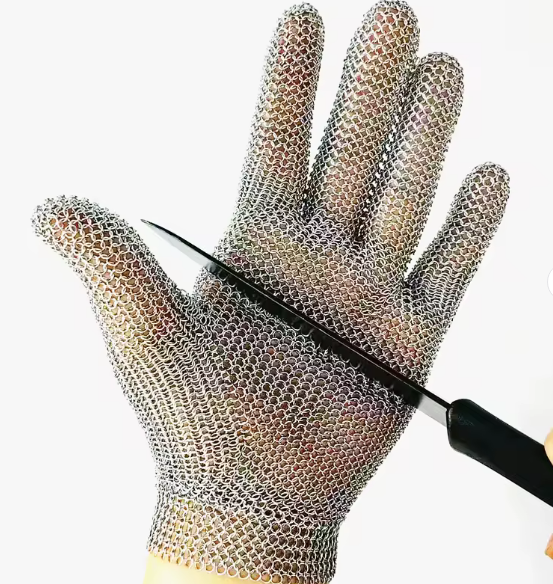
Chainmail Butchers Glove
Unlike general-purpose chainmail gloves, butcher gloves emphasize:
Textured surfaces or integrated grip layers
Reduced slippage when handling wet or oily meat
Snug hand design to improve dexterity
Minimal bulk for fine cutting tasks
Extra protection on palm and fingers
Optimized ring density in high-risk areas
Most chainmail butchers gloves are made using:
Food-grade stainless steel (304 or 316)
Corrosion-resistant alloys
Nickel and chromium components for durability
Resists rust and contamination
Maintains structural integrity under repeated stress
Suitable for food safety environments
The protective capability of a chainmail butchers glove comes from:
The interconnected rings distribute force across the glove surface, reducing the chance of penetration.
When a blade hits the glove:
Impact energy is spread across multiple rings
No single point absorbs the full cutting force
Many butcher gloves are tested under standards such as:
EN 1082 (protective gloves for knives)
ANSI/ISEA cut resistance ratings
| Feature | Chainmail Butchers Glove | Kevlar Gloves |
|---|---|---|
| Material | Stainless steel | Synthetic fiber |
| Cut Resistance | Very high (knife-proof) | High (but limited) |
| Flexibility | Moderate | High |
| Heat Resistance | Good | Excellent |
| Maintenance | Easy cleaning | Requires careful handling |
| Use Case | Butchery, meat processing | General industrial tasks |
Used during:
Deboning
Cutting large meat portions
Trimming fat and connective tissue
Protects workers during high-speed processing lines.
Useful when handling sharp fish bones and knives.
Used by chefs working with:
Large knives
Bone saws
Heavy-duty food prep
When selecting a chainmail butchers glove, consider:
Strong welds reduce the risk of ring separation
Directly impacts durability
Lightweight gloves reduce hand fatigue
Important for long shifts
Adjustable wrist straps ensure secure fit
Prevents glove movement during cutting
Smooth surfaces allow easy cleaning
Resistant to bacteria accumulation
Proper care extends glove lifespan:
Wash with warm water and mild detergent
Rinse thoroughly after each use
Air dry or use industrial drying systems
Inspect regularly for ring damage or wear
Reduces risk of severe hand injuries
Supports precise cutting operations
Suitable for continuous industrial use
Long service life with proper maintenance
Meets food safety requirements
In a meat processing line:
Workers wear gloves during deboning
Knives are used to separate meat from bone
Gloves protect against accidental slips
Efficiency improves while maintaining safety
They are highly cut-resistant, but not completely immune to extreme force or misuse.
Yes, but they are mainly designed for professional environments.
The glove should fit snugly without restricting finger movement.
No special tools are required—regular cleaning is sufficient.
Some models are ambidextrous, while others are hand-specific.
A chainmail butchers glove is a specialized safety tool designed for precision cutting environments, especially in meat and food processing industries. Its combination of cut resistance, durability, and ergonomic design makes it a critical piece of protective equipment for professionals working with sharp blades.
By focusing on structural integrity, proper fit, and material quality, users can significantly reduce workplace injuries while maintaining efficient production workflows.
Processing Demand Survey