
RETON Ring Mesh Co., Ltd.A Professional, Reliable And Experienced Metal Products Manufacturer
+86-18632192156 sales@rt-ringmesh.com

Commercial fishing ranks among the most dangerous occupations worldwide, with hand injuries representing a significant portion of workplace incidents. Fishermen face constant exposure to sharp fish spines, cutting tools, hooks, and abrasive fishing lines—all while working in wet, slippery conditions that increase accident risks. For procurement managers, fishing fleet operators, and safety officers in the seafood industry, selecting appropriate protective equipment directly impacts crew safety, operational efficiency, and liability management.
Chainmail fishing gloves have emerged as the preferred solution for hand protection in demanding marine environments. These specialized gloves combine the proven cut resistance of metal mesh construction with features specifically engineered for fishing applications. Unlike standard cut-resistant gloves, chainmail fishing gloves must withstand constant exposure to saltwater, resist corrosion from marine environments, and provide the dexterity required for tasks like baiting hooks, handling catch, and operating fishing gear.
As a professional China manufacturer and supplier of metal mesh protective equipment, RETON RING MESH CO., LTD. brings extensive experience in producing chainmail fishing gloves for global fishing fleets and seafood processors. Our products are engineered to meet the unique demands of marine environments while complying with international safety standards. For inquiries about bulk orders, custom specifications, or partnership opportunities, contact us at E-Mail: sales@rt-ringmesh.com or WhatsApp: +8618632192156.
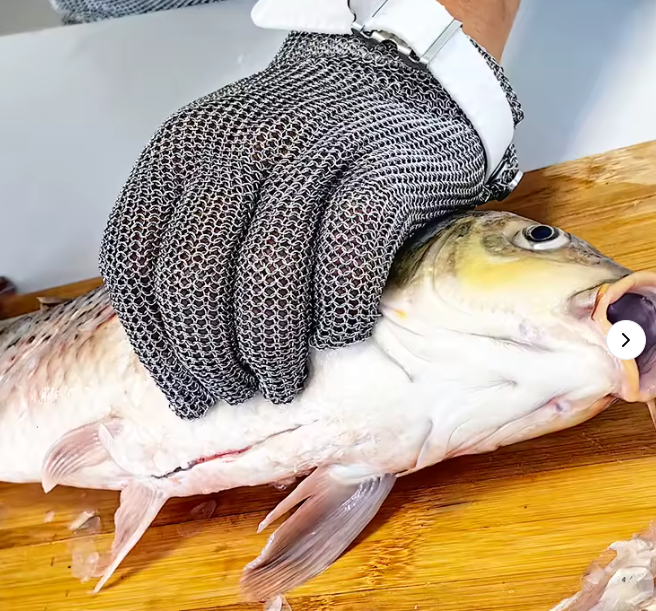
The fishing industry presents a combination of hand injury risks rarely encountered in other sectors:
Puncture Hazards: Many fish species possess sharp dorsal spines, fin rays, or teeth capable of penetrating standard gloves. Catfish, lionfish, triggerfish, and numerous other species can inflict painful, easily infected puncture wounds. Chainmail fishing gloves provide a physical barrier that spines cannot penetrate.
Cutting Hazards: Fishermen routinely use knives for tasks including gutting, filleting, and cutting lines. The non-dominant hand—typically holding the fish or bait—faces constant knife exposure. Additionally, fishing lines under tension can cause severe cuts if they contact unprotected skin.
Abrasion Hazards: Constant handling of rough-skinned fish, abrasive netting materials, and weathered equipment causes significant hand wear. Standard fabric gloves deteriorate quickly under these conditions, while chainmail maintains its protective properties.
Environmental Factors: Saltwater exposure accelerates corrosion in unprotected metals. Wet conditions reduce grip and increase accident likelihood. Cold environments reduce hand sensitivity, making cuts less noticeable until serious injury occurs.
Chainmail fishing gloves address these challenges through their fundamental construction:
The interlocking metal ring structure prevents penetration by fish spines and sharp objects
Stainless steel construction resists saltwater corrosion when properly maintained
The metal mesh provides cut resistance that does not diminish with wear
Gloves can be easily rinsed of fish residues and sanitized between uses
The flexible design maintains hand dexterity for intricate tasks
The marine environment imposes unique material requirements. Standard metals that perform well in dry conditions may fail rapidly when exposed to saltwater. For chainmail fishing gloves, material selection is critical to both safety and economic longevity.
| Material Grade | Key Characteristics | Best Fishing Applications |
|---|---|---|
| Stainless Steel 316L | Marine-grade stainless with molybdenum addition, maximum corrosion resistance against saltwater, low-carbon variant for enhanced weld durability | Deep-sea fishing fleets, longline operations, any application with continuous saltwater exposure |
| Stainless Steel 316 | Marine-grade corrosion resistance, excellent for saltwater environments | Commercial fishing vessels, fish processing at sea, wet holding areas |
| Stainless Steel 304L | Good corrosion resistance, cost-effective for less demanding applications | Freshwater fishing operations, processing facilities away from direct salt exposure |
| Stainless Steel 304 | Standard food-grade corrosion resistance, suitable for general use | Fish processing plants on land, aquaculture operations |
The presence of molybdenum in 316-grade stainless steel fundamentally changes its performance in marine environments. This alloying element provides enhanced resistance to chloride-induced corrosion—the primary failure mechanism for metals exposed to saltwater. For fishing operations where gloves contact seawater throughout each work shift, 316L stainless steel represents the optimal balance of corrosion resistance and durability.
Beyond material grade, ring construction methods affect long-term performance:
Welded Rings: Provide the strongest, most durable construction. Rings are permanently fused at the joint, eliminating weak points where corrosion could initiate. Welded construction is preferred for heavy-duty fishing applications.
Riveted Rings: Offer good strength with historical precedent. The mechanical joining method creates secure connections suitable for many fishing applications, though riveted rings may have more crevices where salt could accumulate.
Butted Rings: Not recommended for fishing applications. The gaps at ring ends provide entry points for salt and debris while offering lower overall strength.
The density of ring packing directly influences both protection level and flexibility:
High-Density Construction: Smaller rings with tighter weave provide maximum protection against small fish spines and fine puncture hazards. This construction is preferred for handling species with numerous small spines or for operations requiring the highest safety margins.
Standard-Density Construction: Balanced protection and flexibility suitable for general fishing tasks. Most commercial fishing operations find this density appropriate for daily use.
Chainmail fishing gloves are available in various coverage configurations:
| Coverage Type | Description | Best Applications |
|---|---|---|
| Five-Finger Gloves | Full individual finger protection, maximum dexterity | Filleting, baiting hooks, net mending, precision tasks |
| Three-Finger Gloves | Thumb and two fingers separated, remaining fingers together | Heavy line handling, hauling operations, cold environments |
| Gauntlet Extensions | Extended coverage up the forearm | Shark handling, operations with wrist exposure, added protection |
| Half-Glove Designs | Fingers exposed, palm and back protected | Warm-weather fishing, tasks requiring fingertip sensitivity |
Wet conditions and frequent glove changes require secure, reliable closure systems:
| Strap Type | Advantages | Considerations |
|---|---|---|
| Stainless Steel Spring Tension | Self-adjusting, no moving parts to fail, corrosion-resistant | Requires proper sizing, tension cannot be manually adjusted |
| Textile Straps with Buckle | Adjustable, comfortable, color-coded sizing | Textile may degrade with salt exposure, requires rinsing |
| Plastic Press-Buckle | Hygienic, easy to operate with wet hands | Plastic may become brittle in cold conditions |
| Hook and Eye Closure | Secure, traditional design | May be difficult to operate with cold, wet hands |
Correct sizing is essential for both safety and user acceptance. Fishermen working long shifts in challenging conditions will reject ill-fitting gloves regardless of protective qualities.
To determine the correct size for chainmail fishing gloves:
Measure the circumference of the dominant hand at its widest point (around the knuckles, excluding the thumb)
Consider whether liner gloves will be worn underneath (recommended for comfort and hygiene)
Account for potential hand swelling during long work shifts in cold conditions
Reference the manufacturer's size chart for corresponding glove size
| Size | Color Code | Palm Circumference | Recommended User |
|---|---|---|---|
| XXS | Brown | Small palm circumference | Small-handed individuals, precision work |
| XS | Green | Small-medium palm circumference | Detailed tasks, smaller crew members |
| S | White | Medium palm circumference | General fishing tasks, average female hands |
| M | Red | Medium-large palm circumference | Average male hands, versatile use |
| L | Blue | Large palm circumference | Larger hands, heavy hauling operations |
| XL | Orange | Extra-large palm circumference | Extra-large hands, cold-weather liner use |
Many manufacturers, including RETON RING MESH CO., LTD. , implement color-coded wrist straps that correspond to glove sizes. This system enables:
Quick identification of correct sizes when issuing gloves to crew
Simplified inventory management for fleet operators
Easy sorting after shared use or laundering
Reduced time spent searching for properly sized gloves
China's established position as a leading producer of metal mesh products offers significant advantages for B2B buyers serving the fishing industry:
Specialized Manufacturing Clusters: Certain regions in China have developed concentrated expertise in wire mesh and chainmail production. These clusters feature integrated supply chains, raw material access, and workforces with specialized skills developed over generations.
Marine-Grade Material Availability: Chinese manufacturers have extensive experience sourcing and working with 316L stainless steel and other marine-grade materials. Supply chain relationships ensure consistent access to certified materials.
Production Flexibility: From small specialty orders to large fleet contracts, Chinese factories can scale production to match buyer requirements. This flexibility supports both established distributors and businesses entering new markets.
Cost-Effective Manufacturing: Efficient production methods and economies of scale enable competitive pricing without compromising quality. B2B buyers can access wholesale pricing that supports their business margins.
Export Experience: Chinese manufacturers have decades of experience shipping products to fishing fleets and seafood processors worldwide, understanding documentation requirements and logistics considerations for international trade.
As a professional China manufacturer, RETON RING MESH CO., LTD. combines technical expertise with understanding of marine industry requirements. Our facility produces chainmail fishing gloves that meet international standards while accommodating the unique needs of global fishing operations.
Our Capabilities Include:
Material certification for marine-grade stainless steels (316L, 316, 304L, 304)
Multiple ring construction options for different protection requirements
Comprehensive size ranges with color-coded identification
Various strap systems suited to marine environments
Custom coverage options including gauntlet extensions
CE, FDA, and other international certifications
For businesses serving specialized fishing sectors or building brand presence, customization capabilities are essential. RETON RING MESH CO., LTD. offers comprehensive customization services:
Logo engraving on wrist straps for fleet identification
Color-coded systems for different vessel departments or roles
Custom printed packaging for organized storage and issuance
Private label programs with your brand specifications
| Fishing Sector | Recommended Customization |
|---|---|
| Longline Operations | Enhanced puncture resistance, gauntlet extensions for arm protection |
| Trawling Fleets | Heavy-duty construction, secure strap systems for rough conditions |
| Fish Processing Vessels | Easy-clean designs, full five-finger protection for cutting tasks |
| Sport Fishing Charters | Aesthetic options, branded presentation for customer experience |
| Aquaculture Facilities | Freshwater-optimized materials, lightweight designs for extended wear |
Choice between 304L and 316L stainless steel based on saltwater exposure levels
Ring density specifications for different puncture risk levels
Wire diameter options balancing protection with weight
Strap system selection based on operating conditions
Selecting the right manufacturing partner requires systematic evaluation. Consider these factors when assessing potential suppliers of chainmail fishing gloves:
| Requirement | Verification Method |
|---|---|
| 316L stainless steel availability | Request material certifications, verify mill sources |
| Saltwater corrosion testing | Request test reports from accredited laboratories |
| Marine application experience | Request case studies or client references from fishing industry |
Material Verification: Confirm that materials used match specifications. Marine-grade stainless requires documented certification traceable to original mills.
Corrosion Resistance Testing: Request results from salt spray testing or other corrosion resistance evaluations relevant to marine environments.
Ring Integrity Verification: Examine samples for consistent ring closure, weld quality (if applicable), and resistance to deformation under load.
| Metric | What It Indicates |
|---|---|
| Response Time | Customer service efficiency |
| On-Time Delivery | Logistics reliability for fleet supply |
| Marine Industry Experience | Understanding of fishing sector requirements |
| Export Documentation Capability | Smooth customs clearance for international shipments |
Most reputable manufacturers provide samples for evaluation, typically at reasonable cost often refundable with bulk orders. Sample evaluation for chainmail fishing gloves should include:
Fit assessment with and without liner gloves
Flexibility testing during simulated fishing tasks
Corrosion resistance observation over time
Strap system functionality in wet conditions
Q1: What is the difference between 304 and 316 stainless steel for fishing gloves?
A: 316 stainless steel contains molybdenum, providing enhanced corrosion resistance against saltwater. For fishing operations with continuous saltwater exposure, 316 or 316L stainless steel is recommended. 304 stainless steel may be suitable for freshwater fishing or processing facilities away from direct salt exposure.
Q2: How should chainmail fishing gloves be maintained on vessels?
A: Gloves should be rinsed with fresh water after each use to remove salt residues. They can be washed with mild soap and thoroughly dried before storage. Regular inspection for damaged rings is essential—any gloves with broken rings must be removed from service immediately. Many vessels maintain spare gloves to ensure continuous protection during extended trips.
Q3: Can chainmail fishing gloves protect against fish spines?
A: Yes. The dense metal ring construction prevents penetration by fish spines, fin rays, and teeth. The level of puncture protection depends on ring density—smaller rings with tighter weave provide maximum protection against small, sharp spines.
Q4: What is the typical lifespan of chainmail fishing gloves with proper maintenance?
A: With proper rinsing and care, stainless steel chainmail fishing gloves can last for extended periods. The metal construction does not degrade like fabric gloves, though rings may eventually wear with heavy use. Many manufacturers offer repair programs to replace damaged rings, extending product life.
Q5: Do you offer gloves specifically designed for different fishing methods?
A: Yes. Professional manufacturers like RETON RING MESH CO., LTD. can provide gloves optimized for different fishing sectors—longline, trawl, processing, or sport fishing. Discuss your specific operations with our sales team to determine optimal specifications.
Q6: Can crew members with different hand sizes be accommodated within one order?
A: Absolutely. Fleet orders typically include a range of sizes based on crew demographics. Our color-coded strap systems make size identification simple, even in challenging vessel conditions.
Q7: What payment terms are available for fleet operators and fishing companies?
A: Payment terms vary by order size and buyer history. Common methods include T/T (telegraphic transfer) and L/C (letter of credit). Discuss options with our sales team for your specific procurement requirements.
Q8: How do I determine the right glove sizes for my crew?
A: We provide sizing guides and can advise on appropriate size distribution based on typical crew demographics. For large fleets, we recommend obtaining sample sizes for crew fitting before placing bulk orders.
Q9: Are these gloves suitable for cold-water fishing operations?
A: Yes. When worn with appropriate liner gloves, chainmail fishing gloves provide protection without compromising warmth. The metal construction does not absorb water, helping maintain hand temperature better than soaked fabric gloves.
Q10: Do you support private labeling for fishing supply companies?
A: Yes. We offer comprehensive OEM services including logo engraving, custom packaging, and branded instruction materials for fishing industry suppliers and distributors.
Proper maintenance extends glove life and ensures consistent protection throughout fishing voyages. For commercial fishing operations, implement these practices:
Rinse gloves thoroughly with fresh water after each use to remove salt residues
Shake out excess water and allow to air dry in well-ventilated area
Store in dry location away from direct salt spray
Never store wet gloves in sealed containers where corrosion could develop
When vessels return to port, gloves should receive more thorough cleaning:
Wash with mild soap and warm water using soft brush
Rinse thoroughly with fresh water
Sanitize if required by food safety protocols for processing operations
Dry completely before storage
Before each use, verify:
No broken or missing rings
All strap components function properly
No sharp edges or deformations
Proper fit maintained
Vessels should maintain spare gloves to ensure:
Continuous protection if primary gloves are damaged
Rotation during extended voyages for cleaning and drying
Accommodation for crew changes or unexpected needs
Sourcing chainmail fishing gloves from China offers fishing fleet operators, seafood processors, and safety equipment distributors access to high-quality products, competitive pricing, and extensive customization options. However, success depends on selecting the right manufacturing partner—one with verified marine-grade capabilities, proper certifications, and genuine understanding of fishing industry requirements.
RETON RING MESH CO., LTD. combines technical expertise in metal mesh manufacturing with specific knowledge of marine applications. Our chainmail fishing gloves are engineered to withstand the demanding conditions of commercial fishing while providing the protection crews require. From material selection through quality control, every product reflects our commitment to safety and durability.
Whether you need standard gloves for fleet-wide distribution or custom designs for specialized fishing operations, our team provides professional guidance throughout the procurement process. From sample evaluation to bulk production and ongoing support, we partner with you for long-term success in protecting fishing industry workers.
Contact RETON RING MESH CO., LTD. today to discuss your requirements:
E-Mail: sales@rt-ringmesh.com
WhatsApp: +8618632192156
Protecting the hands that harvest the sea with quality chainmail fishing gloves from China.
Processing Demand Survey