
RETON Ring Mesh Co., Ltd.A Professional, Reliable And Experienced Metal Products Manufacturer
+86-18632192156 sales@rt-ringmesh.com

Food processing operations often involve manual cutting, trimming, deboning and handling sharp knives. In these working environments, employees may face hand injury risks when handling meat, poultry, fish and other food materials.
Stainless steel mesh gloves, also known as chainmail gloves or metal mesh butcher gloves, are designed to provide cut and puncture resistance during suitable manual cutting tasks.
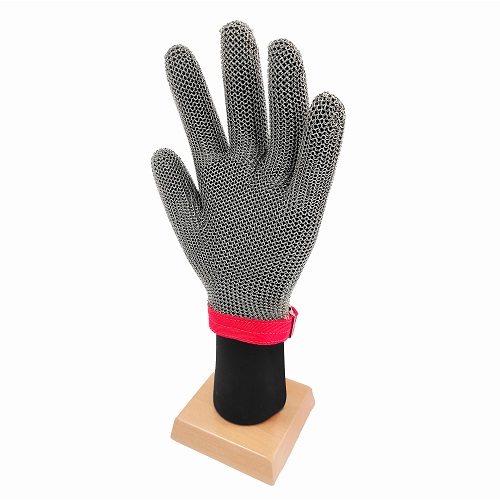
Unlike conventional fabric gloves, stainless steel mesh gloves are constructed from interconnected metal rings. This structure creates a flexible protective barrier while allowing workers to move their fingers and handle tools.
They are commonly considered for applications such as:
Meat cutting and deboning
Poultry processing
Fish filleting and seafood preparation
Slaughterhouse operations
Butchery and commercial food preparation
However, choosing the right glove involves more than selecting a stainless steel model. Buyers should also consider the strap design, glove length, hand size, cleaning requirements and actual workplace hazards.
The strap is an important part of a chainmail glove. It affects how the glove is fastened, adjusted, cleaned and maintained.
Different processing environments may require different fastening designs.
Textile Strap Stainless Steel Gloves
Textile strap gloves feature an adjustable textile fastening system with a metal buckle. The strap can be adjusted according to the wearer's wrist size.
Key features include:
Adjustable fastening for a more personalized fit
Color-coded straps for easier size identification
Five-finger design for hand coverage
Reversible design for left- or right-hand use, according to the product configuration
This option can be considered by meat processing facilities and professional butchers looking for an adjustable glove design.
Explore Stainless Steel Short Gloves With Textile Strap.
Plastic Strap Stainless Steel Gloves
Plastic strap gloves use an adjustable plastic fastening system. The strap design is intended to support cleaning and hygiene management in food processing environments.
Their main features include:
Adjustable plastic strap
Replaceable strap design
Easy cleaning and disinfection
Color-coded sizes
Suitability for wet working environments, according to the product specifications
For facilities with frequent cleaning procedures, buyers can evaluate this design based on their sanitation requirements and workplace procedures.
See Stainless Steel Short Gloves With Plastic Strap.
Spring Strap Stainless Steel Gloves
Spring strap gloves use a stainless steel spring fastening structure. The spring adjusts to the wrist and does not require the same type of buckle or replaceable strap used in other designs.
Key features include:
Flexible wrist adjustment
All-stainless-steel construction for the glove and spring strap
No separate press buttons or replacement strap required
Suitable for environments where frequent cleaning is necessary
Buyers can compare the spring design with textile and plastic strap options to determine which fastening system best suits their daily operations.
View Stainless Steel Short Gloves With Spring Strap.
The required protection area is another important factor when selecting stainless steel mesh gloves.
Short gloves mainly cover the hand and wrist area. They may be considered for tasks where the main cutting exposure is around the hand.
Long gloves extend protection beyond the wrist. Depending on the model, the sleeve length can be selected according to the work requirements.
RETON offers several long-glove configurations:
Long gloves with textile straps
Long gloves with plastic straps
Long gloves with metal claws
Long gloves with spring straps
The available sleeve extensions include 8 cm, 15 cm and 20 cm, with tailor-made options depending on customer requirements.
For workers whose forearms may be exposed to sharp hand tools during suitable manual operations, long-sleeve designs may be worth evaluating.
Explore the Stainless Steel Long Gloves range.
A properly fitted glove is essential for comfort, movement and effective use.
A glove that is too loose may affect handling and control, while one that is too tight may restrict finger movement and cause discomfort during extended work.
Before placing a bulk order, buyers should check:
Palm circumference
Palm length
Available glove sizes
Strap adjustment range
Whether the design is suitable for the intended hand
RETON offers multiple size options, including XXS, XS, S, M, L and XL on the listed glove models. Certain product configurations also list XXL availability.
Color-coded straps help workers identify different glove sizes more easily in shared working environments.
For distributors and food processing companies purchasing multiple units, confirming the size distribution before ordering can help reduce fitting problems.
Hand protection is only one part of workplace safety. In some manual cutting operations, workers may also need additional protection around the chest, abdomen and upper thighs.
This is where a stainless steel mesh apron can complement chainmail gloves.
A stainless steel mesh apron is made from interconnected metal rings and is designed to provide protection against cuts and stabs in selected body areas.
Depending on the product design and dimensions, it can cover areas including:
Chest
Abdomen
Upper thighs
RETON's stainless steel mesh apron is available in different dimensions, including 55 × 60 cm and 60 × 80 cm options, with customized sizes available according to customer requirements.
The product page also lists adjustable straps and 316L stainless steel material for the relevant model.
Explore the Stainless Steel Mesh Apron for product details and available configurations.
For meat processing plants, slaughterhouses and seafood processing facilities, purchasing gloves and aprons together can simplify protective equipment sourcing.
A suitable combination may include:
Stainless steel mesh gloves for hand protection during appropriate manual cutting tasks
Stainless steel mesh aprons for additional torso coverage
Other protective clothing selected according to the workplace risk assessment
The exact combination should depend on the cutting process, exposed body areas, equipment and applicable workplace safety requirements.
Meat processing workers often perform trimming, deboning and portioning tasks with hand knives. Stainless steel mesh gloves may be selected for suitable operations where hand protection against knife cuts is required.
Poultry processing involves manual trimming and preparation work. Depending on the specific task, chainmail gloves can be considered as part of a workplace hand-protection program.
Fish filleting, shellfish preparation and oyster handling can involve sharp knives and edges. Stainless steel mesh gloves are commonly considered for suitable manual seafood processing tasks.
Workers in slaughterhouses may handle sharp knives during different processing stages. The appropriate glove type should be selected according to the specific cutting activity and workplace safety procedures.
Stainless steel mesh gloves and aprons are designed for selected manual cutting protection applications. They are not universal protective equipment for every cutting hazard.
They must not be used for chainsaw operations, band saws, circular saws, powered blades, grinding machines or other high-speed cutting equipment.
Powered machinery may catch or pull metal mesh material into moving parts, creating serious injury risks.
These products also do not eliminate all cutting or puncture risks. Employers should conduct task-specific risk assessments, provide proper training and follow applicable safety standards and equipment instructions.
Before purchasing, buyers should confirm that the product is suitable for the intended manual operation.
For wholesalers, distributors and food processing companies, product selection is only one part of the purchasing process. Supplier evaluation also matters.
Consider the following points when comparing suppliers:
A supplier with different glove configurations can help buyers compare short gloves, long gloves and different strap designs.
Check the stainless steel grade, ring construction, glove dimensions, available sizes and fastening details. Product specifications should be confirmed for the exact model being purchased.
Food processing facilities should consider cleaning procedures, strap materials and maintenance requirements. Ask the supplier for product-specific cleaning instructions.
Request relevant certificates and test reports for the exact product model. Buyers should verify whether the documentation meets the requirements of their destination market and intended application.
For distributors and industrial buyers, it is useful to confirm available sizes, sleeve lengths, strap options, packaging and customization possibilities before placing a large order.
RETON Ring Mesh Co., Ltd. specializes in stainless steel ring mesh products, including stainless steel mesh gloves and metal mesh aprons.
Its product range includes:
Five-finger stainless steel mesh gloves
Short gloves with textile, plastic and spring straps
Long-sleeve stainless steel mesh gloves
Stainless steel mesh aprons
With different product configurations available, buyers can compare hand and body protection options according to their processing requirements.
For wholesalers, distributors and food processing companies, RETON can provide product information to support model selection and purchasing discussions.
If you are sourcing stainless steel butcher gloves, chainmail gloves or stainless steel mesh aprons, contact RETON with your required product type, size, quantity and destination market.
They can be used for selected manual cutting tasks in meat processing, such as suitable deboning and trimming operations. The exact application should be evaluated according to workplace hazards and product instructions.
Textile strap gloves use an adjustable textile fastening system, while plastic strap gloves use an adjustable plastic fastening structure. Buyers should compare cleaning requirements, fastening preferences and product specifications before selecting a model.
Short gloves mainly cover the hand and wrist, while long gloves extend protection toward the forearm. The choice depends on the exposed area and the requirements of the specific manual operation.
No. They are not designed for chainsaws, band saws, circular saws or other powered cutting equipment. Using chainmail gloves around moving machinery can create serious entanglement hazards.
Yes. Buyers can discuss purchasing stainless steel mesh gloves and aprons together to meet different hand and body coverage requirements.
It is helpful to provide the product type, strap preference, glove size, sleeve length, apron dimensions, estimated order quantity and destination country. This information helps the supplier identify suitable product configurations.
Choosing the right protective equipment starts with understanding the actual cutting tasks, required coverage and workplace conditions.
Whether you are sourcing short chainmail gloves, long stainless steel mesh gloves or protective mesh aprons, comparing product configurations before ordering can help you make a more suitable purchasing decision.
Contact RETON Ring Mesh to discuss your requirements for stainless steel mesh gloves and aprons.
Hot Tags: stainless steel mesh gloves for food processing, stainless steel butcher gloves, chainmail gloves, stainless steel cut resistant gloves, stainless steel long gloves, plastic strap mesh gloves, spring strap chainmail gloves, stainless steel mesh apron, metal mesh protective equipment
Processing Demand Survey