
RETON Ring Mesh Co., Ltd.A Professional, Reliable And Experienced Metal Products Manufacturer
+86-18632192156 sales@rt-ringmesh.com

When working with oysters, safety is a primary concern due to sharp shells and slippery surfaces. Choosing the right oyster shucking glove chainmail helps reduce the risk of hand injuries while improving handling efficiency.
Unlike general-purpose cut-resistant gloves, oyster shucking gloves are specifically designed for seafood processing environments, where moisture, salt, and hygiene requirements must all be considered.
RETON Ring Mesh Co., Ltd. supplies stainless steel ring mesh gloves suitable for oyster shucking and other food handling applications.
E-Mail: sales@rt-ringmesh.com
WhatsApp: +8618632192156
This guide focuses on how these gloves work, how to select the right type, and how to use them correctly in real working conditions.
An oyster shucking glove chainmail is a protective glove made from interlinked stainless steel rings, designed to protect the non-dominant hand while opening oysters.
Cut resistance against sharp oyster shells
Corrosion resistance in saltwater environments
Flexible structure for grip and control
Easy cleaning for food safety compliance
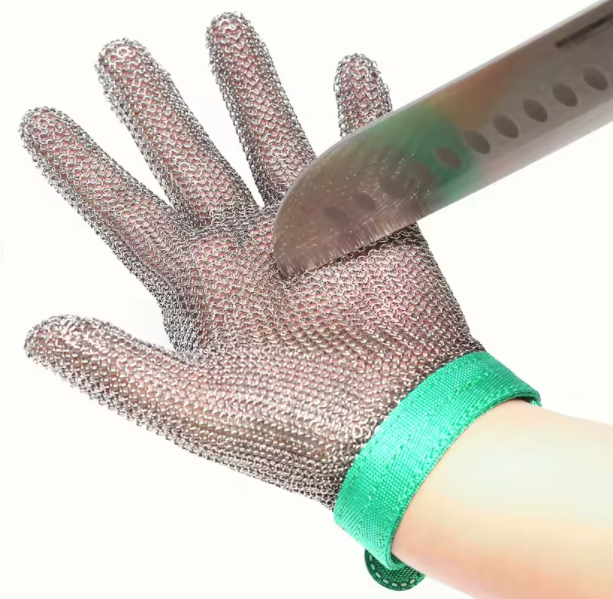
Oyster shucking involves inserting a knife into tightly closed shells, which creates a high risk of slipping. Chainmail gloves help reduce injuries in several ways:
Oyster shells can easily cut skin. Metal ring mesh distributes pressure and reduces penetration risk.
The textured surface of chainmail improves control when handling wet oysters.
Unlike fabric gloves, stainless steel mesh performs consistently in water and does not degrade easily.
This section differs from the previous article by focusing specifically on food-safe materials and marine environments:
| Material Type | Corrosion Resistance | Food Safety | Durability | Suitability for Oyster Shucking |
|---|---|---|---|---|
| Stainless Steel 304 | High | Yes | High | Suitable |
| Stainless Steel 316 | Very High | Yes | Very High | Highly recommended (saltwater) |
| HPPE Fabric Gloves | Moderate | Yes | Medium | Limited (less cut resistance) |
| Rubber Gloves | Low | Yes | Low | Not suitable |
Insight: Stainless steel 316 is often preferred in coastal and high-salinity environments.
| Parameter | Typical Value |
|---|---|
| Material | SS304 / SS316 stainless steel |
| Ring Diameter | 3.0 mm – 4.5 mm |
| Wire Thickness | 0.5 mm – 0.7 mm |
| Glove Weight | 200 g – 350 g |
| Cut Resistance Level | ANSI A7 – A9 |
| Closure Type | Adjustable strap / buckle |
| Hygiene Compliance | Food-grade standards |
This section replaces the “how to make” process with practical usage guidance:
The glove should be worn on the hand holding the oyster, not the knife hand.
A snug fit improves control and reduces the chance of slipping.
Hold the oyster firmly and insert the knife at the hinge while keeping fingers protected behind the blade.
Work on a flat, non-slip surface to improve safety.
Proper hygiene is essential in seafood handling:
Rinse immediately after use to remove salt and debris
Wash with warm water and food-safe detergent
Sanitize regularly (especially in commercial kitchens)
Dry completely before storage
| Feature | Chainmail Gloves | Fabric Cut-Resistant Gloves |
|---|---|---|
| Cut Resistance | Very High | Medium to High |
| Water Resistance | Excellent | Moderate |
| Hygiene | Easy to sanitize | Requires more care |
| Flexibility | Moderate | High |
| Durability | Long-term | Medium |
Unlike the previous article, this section focuses on seafood-specific use cases:
Oyster farms and aquaculture operations
Seafood markets and fish processing plants
Restaurants and commercial kitchens
Home seafood preparation
Q1: Do I need one glove or a pair for oyster shucking?
Typically, one glove is used on the non-dominant hand. Some users prefer a pair for added safety.
Q2: Is stainless steel safe for food handling?
Yes. Food-grade stainless steel (SS304/SS316) is widely used in food processing.
Q3: Can chainmail gloves prevent all injuries?
They reduce the risk significantly but should be used with proper technique.
Q4: How do I choose between SS304 and SS316?
SS316 is better for saltwater environments due to higher corrosion resistance.
Q5: Are these gloves suitable for other tasks?
Yes, they can be used for fish filleting, meat cutting, and similar applications.
RETON Ring Mesh Co., Ltd. provides chainmail gloves designed for food processing and seafood handling applications.
The company supports:
Stainless steel ring mesh production
Custom sizing for different hand types
Bulk supply for commercial operations
Contact:
E-Mail: sales@rt-ringmesh.com
WhatsApp: +8618632192156
An oyster shucking glove chainmail is an important safety tool for anyone handling oysters, from home users to commercial seafood processors. By selecting the right material, ensuring proper fit, and following correct usage practices, users can reduce injury risks while maintaining efficiency and hygiene.
This guide provides a practical understanding of how to choose and use chainmail gloves specifically for oyster shucking, helping you make informed decisions for both safety and performance.
Processing Demand Survey