
RETON Ring Mesh Co., Ltd.A Professional, Reliable And Experienced Metal Products Manufacturer
+86-18632192156 sales@rt-ringmesh.com

Butchers work with sharp knives, cleavers, and cutting tools every day. To reduce the risk of hand injuries while maintaining precision, stainless steel anti-cut gloves for butchers are widely used as essential protective equipment. These gloves are designed to balance cut resistance, flexibility, and hygiene, making them suitable for professional meat handling environments.
Stainless steel anti-cut gloves are made from interlocking metal rings, forming a mesh structure that protects the hand from cuts and punctures. Unlike fabric cut-resistant gloves, stainless steel mesh provides mechanical protection by preventing blades from reaching the skin.
They are commonly used in:
Butcher shops
Slaughterhouses
Meat processing plants
Poultry and seafood preparation
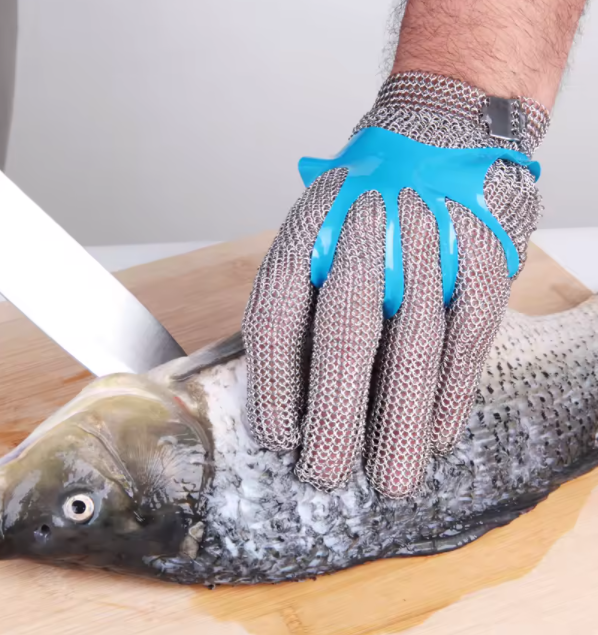
The stainless steel ring structure acts as a barrier against sharp tools:
Reduces the risk of knife injuries
Suitable for deboning and trimming tasks
Typically made from 304 or 316 stainless steel, offering:
Corrosion resistance
Long service life
Compatibility with food processing environments
Despite being metal, these gloves allow:
Natural finger movement
Good control when handling knives
Precision cutting without major restriction
Stainless steel gloves are non-porous and easy to sanitize:
Can be washed with hot water and detergent
Suitable for repeated disinfection
Do not absorb liquids or odors
| Type | Description | Best Use |
|---|---|---|
| Full Hand Mesh Glove | Covers entire hand | General butchering |
| Long Cuff Glove | Extends to wrist/forearm | Extra protection |
| Three-Finger Glove | Partial coverage | Specific cutting tasks |
| Reversible Glove | Fits both hands | Flexible operations |
Gloves should fit snugly for better control
Loose gloves may reduce accuracy and safety
Smaller rings → higher protection
Larger rings → more flexibility
Choose based on the level of cutting risk.
Look for secure fastening such as:
Adjustable straps
Metal buckles
Elastic wrist closures
For long working hours:
Use inner liner gloves (cotton or cut-resistant fabric)
Ensure proper ventilation and fit
| Feature | Stainless Steel Gloves | Fabric Gloves |
|---|---|---|
| Cut Resistance | High | Moderate |
| Durability | Long-lasting | Wears out faster |
| Hygiene | Easy to sanitize | May retain moisture |
| Flexibility | Moderate | High |
| Best Use | Heavy-duty cutting | Light tasks |
Rinse after use
Wash with food-safe detergent
Sanitize with approved solution
Dry completely before storage
Check for broken rings regularly
Replace damaged gloves immediately
Store in a dry, clean environment
Leads to poor grip and reduced safety.
Damaged rings reduce protection effectiveness.
Avoid using mesh gloves with heavy machinery or rotating equipment.
Stainless steel gloves are cut-resistant, not cut-proof
Always follow proper knife handling techniques
Combine with other PPE if needed (aprons, arm guards)
These gloves are ideal for:
Deboning meat
Trimming fat
Slicing large cuts
Handling sharp tools
They help improve both worker safety and operational efficiency.
No, they are highly cut-resistant but not completely cut-proof.
Yes, but using an inner glove improves comfort during long shifts.
With proper care, they can last a long time compared to fabric gloves.
Yes, they are designed for hygienic use in food environments.
Many models are reversible and can be worn on either hand.
Stainless steel anti-cut gloves for butchers provide a practical solution for reducing hand injuries in meat processing environments. With strong cut resistance, long durability, and easy cleaning, they are widely used in professional settings.
Choosing the right size, maintaining the gloves properly, and using them correctly will ensure consistent performance and safer working conditions.
Processing Demand Survey