
RETON Ring Mesh Co., Ltd.A Professional, Reliable And Experienced Metal Products Manufacturer
+86-18632192156 sales@rt-ringmesh.com

In professional butchery and meat processing, hand protection alone is not enough. Knife slips, downward cuts, and handling large meat sections can expose the torso, hips, and upper legs to injury. A stainless steel butcher apron for knife protection is designed to reduce these risks by providing a durable, wearable barrier during daily operations.
This guide focuses specifically on knife protection in butcher environments, with practical insights on design, usage, and selection—without repeating general mesh PPE concepts.
Butcher work involves:
Continuous knife handling
Forceful cutting motions
Close contact with carcasses
Wet and slippery surfaces
These conditions increase the likelihood of:
Accidental blade contact with the body
Downward cutting injuries
Side-body exposure during repositioning
A stainless steel apron helps mitigate these risks by protecting high-exposure zones.
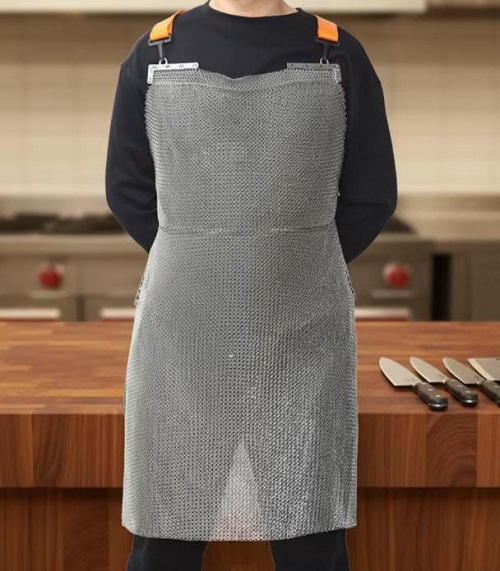
Unlike soft materials, stainless steel mesh creates a mechanical barrier:
Interlinked metal rings disperse blade force
Prevent direct penetration from sharp edges
Reduce severity of accidental contact
This is especially useful during:
Deboning
Splitting large cuts
Fast repetitive knife work
A butcher apron is designed to protect:
Lower chest
Abdomen
Upper thighs
Hip area
Some models extend further depending on risk level.
Certain designs include:
Denser mesh in high-risk zones
Double-layer sections for added resistance
This improves protection where knife contact is more likely.
Modern aprons are engineered to:
Spread weight across shoulders and waist
Reduce strain during long shifts
Maintain stability while moving
Efficient fastening is important in busy environments:
Adjustable shoulder straps
Waist belts with secure locking
Quick-release mechanisms for emergencies
| Type | Structure | Recommended Use |
|---|---|---|
| Classic Front Apron | Covers front body only | Standard butcher work |
| Extended Length Apron | Extra thigh coverage | Heavy cutting tasks |
| Wrap-Around Apron | Side protection included | High-risk environments |
| Split Apron Design | Divided lower section | Improved mobility |
Light trimming → standard coverage
Heavy carcass work → extended or wrap-around design
Heavier aprons = more protection
Lighter aprons = better flexibility
Choose based on work intensity.
A secure apron should:
Stay in position during movement
Not shift when bending or lifting
Factors such as:
Wet floors
Cold storage areas
High-speed production lines
may influence your choice of apron design.
| Feature | Stainless Steel Apron | Fabric/Plastic Apron |
|---|---|---|
| Knife Protection | Strong | Minimal |
| Durability | Long-term use | Shorter lifespan |
| Resistance to Cuts | High | Low |
| Suitability for Heavy Work | Yes | Limited |
To ensure effective protection:
Adjust straps for a snug fit
Cover all high-risk areas fully
Avoid loose or swinging sections
Combine with gloves and arm guards when needed
Knife protection gear must also meet hygiene standards.
Rinse immediately after use
Wash with approved detergent
Sanitize regularly
Dry completely before storage
Non-porous surface
No absorption of blood or liquids
Easy compliance with food safety standards
Regular checks are essential:
Inspect for broken or deformed rings
Check strap integrity
Replace damaged sections promptly
Proper maintenance ensures consistent protection.
Leads to poor coverage and reduced safety.
Front-only protection may not be enough in dynamic work environments.
Residue buildup can affect hygiene and durability.
Loose straps can cause the apron to shift during work.
Stainless steel butcher aprons are widely used in:
Butcher shops
Meat processing plants
Slaughterhouses
Industrial food production lines
They are especially useful where knife work is frequent and forceful.
They are highly cut-resistant but not completely cut-proof.
Properly designed aprons allow good mobility while providing protection.
Yes, they are commonly used with mesh gloves and arm guards.
Yes, especially models with balanced weight distribution and adjustable straps.
With proper care, they can be used for a long period in industrial environments.
A stainless steel butcher apron for knife protection plays an important role in reducing injury risk in professional cutting environments. By covering critical body areas and providing a durable protective barrier, it complements hand protection and enhances overall workplace safety.
Selecting the right design, ensuring proper fit, and maintaining the apron regularly will help achieve consistent performance and safer daily operations.
Processing Demand Survey