
RETON Ring Mesh Co., Ltd.A Professional, Reliable And Experienced Metal Products Manufacturer
+86-18632192156 sales@rt-ringmesh.com

In meat processing, butchery, slaughterhouses, and food preparation facilities, workers regularly handle knives and other sharp cutting tools. Hand protection therefore needs to provide a practical balance between cut resistance, flexibility, hygiene, and comfortable daily use.
A stainless steel mesh glove is designed for this type of working environment. Its interlinked stainless steel ring construction creates a protective barrier around the hand while allowing the fingers to move during cutting, trimming, deboning, and handling tasks.
For meat processors, butcher shops, food factories, and safety equipment distributors, selecting the right glove involves more than simply choosing a metal glove. Material, glove length, fastening system, size, application, cleaning requirements, and production consistency all need to be considered.
RETON Ring Mesh Co., Ltd. manufactures stainless steel ring mesh products including stainless steel mesh gloves and protective mesh aprons for food processing and other cutting-related applications. The company has been producing stainless steel ring mesh products since 2008 and supplies customers in international markets.
Meat processing involves repetitive cutting operations. Workers may need to trim meat, separate portions, debone products, or handle knives continuously during a production shift.
A conventional fabric glove can provide a certain level of protection, but it may not be suitable for every cutting environment. A stainless steel mesh glove uses interconnected metal rings to create a physical protective layer between the hand and the cutting tool.
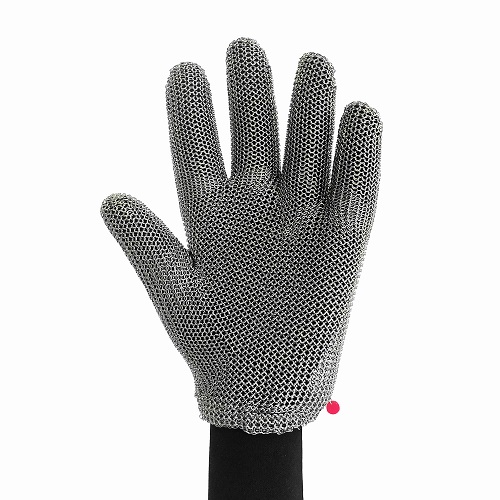
The structure provides several practical characteristics:
Stainless steel construction
Flexible ring mesh structure
Protection around the hand and fingers
Washable surface for food-processing environments
Different sizes for different hand dimensions
Multiple strap and fastening options
Short and long glove configurations
RETON's product range includes short five-finger gloves, long gloves, three-finger gloves, and models using textile, plastic, metal-claw, or spring straps.
The correct glove should always be selected according to the actual work process and applicable workplace safety requirements rather than relying only on the general term "cut-resistant glove."
A stainless steel mesh glove is constructed from many interconnected stainless steel rings. The rings form a flexible mesh rather than a rigid metal shell.
This structure allows the glove to move with the hand while creating a continuous layer across the protected area.
The finger sections are particularly important for meat-processing applications because workers need to maintain control of knives and products. A glove that is too loose can interfere with movement, while one that is too tight may become uncomfortable during extended use.
RETON's product information describes its stainless steel mesh gloves as individually welded stainless steel ring structures designed for flexibility, durability, and protection.
For buyers, the important point is that ring construction and glove fit work together. Protection should not be considered separately from handling performance.
Different meat-processing operations can require different glove configurations. Instead of selecting one standard model for every worker, purchasing teams can consider the following factors.
Five-finger gloves provide individual protection for each finger while maintaining the flexibility required for detailed cutting work.
They are suitable for operations where workers need to grip knives, meat, or other products repeatedly.
RETON offers five-finger stainless steel gloves in different configurations, including short gloves with adjustable textile straps. These gloves are available in multiple sizes and can be worn on either the left or right hand according to the product design.
A long stainless steel mesh glove extends protection beyond the hand toward the wrist and lower arm.
This type can be considered when the working position creates additional exposure around the wrist or when the buyer wants greater coverage than a standard short glove.
RETON's product range includes long stainless steel gloves as a separate product configuration.
Three-finger models can be considered for specific work processes where protection of selected fingers is required while maintaining a different level of hand movement.
They are part of RETON's stainless steel mesh glove range and provide an alternative to conventional five-finger designs.
The fastening system is another factor that should not be overlooked when purchasing stainless steel mesh gloves for meat processing.
Depending on the model, RETON offers different fastening configurations, including:
| Glove Configuration | Typical Consideration |
|---|---|
| Textile strap | Adjustable fit and quick size identification |
| Plastic strap | Easy adjustment and cleaning |
| Metal claw | Secure fastening for specific work requirements |
| Spring strap | Flexible fastening arrangement |
| Long glove | Extended coverage |
| Short glove | Compact hand protection |
For example, RETON's short five-finger textile-strap glove uses adjustable fastening and color-coded straps for size identification. The product is also described as ambidextrous and designed for easy cleaning.
For a large meat-processing facility, standardized strap systems can also make it easier to manage different glove sizes across production workers.
Material selection matters in environments where gloves are repeatedly washed and exposed to water, food residues, and cleaning procedures.
RETON offers stainless steel mesh glove configurations using stainless steel ring mesh, including 316L stainless steel in its textile-strap model.
When evaluating material, buyers should consider:
Stainless steel grade
Ring construction
Welding quality
Corrosion resistance
Cleaning requirements
Applicable food-contact requirements
Intended working environment
Material selection should match the buyer's application and regulatory requirements rather than being based solely on a material name.
Although meat processing is one of the main applications, stainless steel ring mesh gloves can also be used in other working environments where manual cutting creates a hand-protection requirement.
Common applications include:
Workers involved in trimming, slicing, cutting, and deboning can use stainless steel butcher gloves as part of their personal protective equipment.
Workers in slaughtering and meat preparation operations may require hand protection while using sharp cutting tools.
Seafood processing can involve knives, shells, and repetitive manual handling. Stainless steel mesh gloves are suitable for applications where washable metal-mesh protection is required.
RETON specifically lists fish and shellfish processing among the applications for its stainless steel short gloves.
Poultry processing operations can also involve repetitive cutting and trimming tasks where hand protection is required.
Depending on the glove configuration and applicable safety requirements, stainless steel mesh gloves can also be used for certain garment, leather, plastic, wood, and glass processing applications.
The glove should always be matched to the specific hazard and work procedure rather than treating every application as identical.
Food-processing environments require protective equipment that can be cleaned and maintained effectively.
One reason stainless steel mesh gloves are commonly considered for food-related applications is the non-porous metal surface and the ability to wash the glove after use.
RETON's product information describes its stainless steel mesh gloves as easy to clean and suitable for applications where hygiene is important. Its textile-strap glove is also listed with food-contact testing information.
For commercial food production, buyers should establish a consistent cleaning and inspection procedure that follows the requirements of their facility and local food-safety regulations.
After cleaning, gloves should be properly dried and inspected for damaged or missing rings, damaged straps, or other issues before returning them to service.
For B2B buyers, product specifications are only one part of supplier evaluation.
A reliable stainless steel mesh glove supplier should be able to provide consistent production, different glove configurations, appropriate sizing, quality inspection, and documentation relevant to the target market.
Before placing a bulk order, buyers can evaluate:
Product range:
Does the supplier offer short, long, five-finger, three-finger, and different fastening options?
Material:
Can the supplier clearly identify the stainless steel grade and construction used?
Sizing:
Are multiple sizes available for different users?
Production capability:
Can the supplier maintain consistent ring construction and glove dimensions across repeat orders?
Testing and certification:
Can the supplier provide relevant documentation for the intended market and application?
Customization:
Can the supplier support specific glove sizes, strap configurations, packaging, or private-label requirements?
After-sales support:
Can the supplier respond to quality or replacement requirements after delivery?
These factors are particularly relevant for wholesalers, distributors, meat-processing companies, and food-industry equipment suppliers purchasing stainless steel mesh gloves in volume.
RETON Ring Mesh Co., Ltd. focuses on stainless steel ring mesh products, with its main product categories covering stainless steel mesh gloves, stainless steel mesh aprons, and other stainless steel ring mesh products.
The company states that it was founded in 2008 and operates its own production facilities for ring mesh, gloves, and aprons. Its company information also lists applications including abattoirs, food processing, fish, and oyster processing.
For international B2B buyers, RETON can provide different glove configurations rather than limiting customers to one standard model. Its product range includes multiple strap types, short and long gloves, and other ring mesh protective products.
This product breadth allows buyers to discuss the actual working environment, glove size, coverage requirements, fastening method, and order quantity before selecting a model.
When contacting a stainless steel mesh glove manufacturer, providing detailed requirements can make the quotation process more efficient.
A purchasing request can include:
Product type
Five-finger or three-finger design
Short or long glove
Stainless steel material requirement
Glove size
Strap preference
Application
Required quantity
Packaging requirements
Target market
Certification or testing requirements
Private-label requirements, if applicable
RETON's website also provides a processing demand survey covering buyer type, product selection, purchasing quantity, and trade terms, which reflects the type of information useful for B2B order discussions.
For larger orders, buyers can also discuss sample approval and production requirements before confirming the full order.
A stainless steel mesh glove is mainly used to provide hand protection during manual cutting, slicing, trimming, and similar operations. Common applications include meat processing, butchery, slaughterhouses, seafood processing, and some industrial cutting operations.
They are widely used for manual cutting tasks in meat-processing environments. The appropriate glove should be selected according to the specific work hazard, applicable safety requirements, and facility procedures.
A short glove mainly covers the hand and wrist area, while a long glove extends the protected area farther toward the forearm. The choice depends on the working position and required coverage.
Yes. Stainless steel mesh gloves are used in seafood-related applications, including fish and shellfish processing. RETON lists fish and shellfish processing among the applications of its stainless steel glove products.
Depending on the product model and order requirements, buyers can discuss glove size, length, strap configuration, packaging, and other specifications with the manufacturer.
The gloves should be cleaned according to the procedures required by the user's workplace and applicable food-safety requirements. After washing and sanitizing, the gloves should be dried and inspected before reuse.
A stainless steel mesh glove for meat processing is more than a basic metal glove. The ring construction, material, glove size, finger configuration, cuff length, fastening system, cleaning requirements, and intended application all affect whether a particular model is suitable for daily work.
For meat processors, butcher shops, slaughterhouses, seafood processors, food factories, wholesalers, and safety-equipment distributors, selecting a manufacturer with multiple product configurations can make it easier to match the glove to the actual working environment.
RETON Ring Mesh Co., Ltd. specializes in stainless steel ring mesh products, including stainless steel mesh gloves and mesh aprons, with different glove configurations available for professional applications.
For bulk purchasing or customized requirements, buyers can provide the application, glove type, size, fastening method, quantity, and target market when contacting RETON.
Stainless Steel Mesh Glove, Stainless Steel Mesh Gloves for Meat Processing, Stainless Steel Butcher Gloves, Meat Processing Gloves, Stainless Steel Chainmail Glove, Cut Resistant Stainless Steel Glove, Stainless Steel Glove Manufacturer, Stainless Steel Mesh Glove Supplier, Chainmail Butcher Glove, Food Processing Safety Gloves
Processing Demand Survey