
RETON Ring Mesh Co., Ltd.A Professional, Reliable And Experienced Metal Products Manufacturer
+86-18632192156 sales@rt-ringmesh.com

Oyster shucking is a common task in seafood processing, restaurants, and oyster farms. However, opening oysters with knives can pose a risk of hand injuries due to slippery shells and sharp blades. For this reason, stainless steel mesh gloves are widely used as protective equipment during oyster shucking operations.
Also known as chainmail gloves, these gloves are made from thousands of interlocked stainless steel rings that create a flexible metal mesh structure. This design helps reduce the risk of cuts while maintaining the hand mobility needed for precise work.
In seafood processing environments, stainless steel oyster shucking gloves provide a balance between safety, durability, and hygiene. Manufacturers such as RETON RING MESH CO., LTD. produce stainless steel mesh protective equipment designed for industries including seafood processing, meat cutting, and food manufacturing.
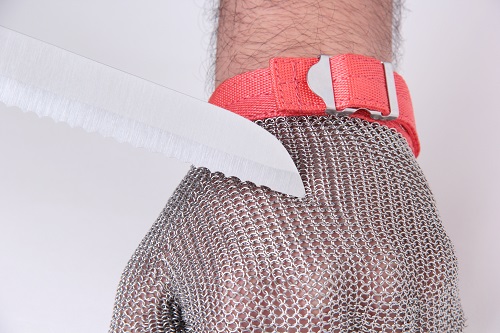
This guide explains how stainless steel mesh gloves work for oyster shucking, their technical specifications, advantages, and how to select the right protective gloves for seafood processing operations.
Oyster shells are hard and irregular in shape, and they often require force to open. Workers typically use an oyster knife to separate the shell halves. During this process, several risks can occur:
Knife slips during shell opening
Sharp oyster shell edges
Wet and slippery surfaces
High repetitive hand movement
Without protective equipment, these factors may lead to hand injuries. Stainless steel mesh gloves for oyster shucking provide a protective barrier between the knife and the worker’s hand.
The chainmail structure distributes the force of the blade across multiple steel rings, reducing the likelihood of the knife penetrating the glove.
Stainless steel mesh gloves are protective gloves constructed from stainless steel rings connected together to form a flexible mesh structure.
Each ring is typically welded or tightly closed to maintain structural integrity. When assembled together, thousands of rings create a chainmail fabric that resists cuts from sharp tools.
Characteristics of stainless steel mesh gloves include:
High resistance to knife cuts
Flexible chainmail construction
Corrosion-resistant stainless steel material
Easy cleaning and sanitation
Long service life in food processing environments
These features make stainless steel gloves suitable for tasks such as oyster shucking, fish filleting, and shellfish processing.
Although commonly used for oyster processing, stainless steel mesh gloves are used in several seafood-related applications.
The gloves help protect the non-knife hand that holds the oyster while the knife is inserted into the shell hinge.
Workers cutting fish fillets use mesh gloves to reduce knife injury risks.
Processing clams, mussels, and other shellfish can involve sharp shells and cutting tools.
In industrial seafood facilities, workers often handle knives during trimming and preparation.
The performance of stainless steel mesh gloves depends on several technical parameters including ring diameter, wire thickness, and material quality.
| Parameter | Typical Specification |
|---|---|
| Material | Stainless Steel 304 / 316 |
| Ring Diameter | 3 mm – 4 mm |
| Wire Thickness | 0.5 mm – 0.6 mm |
| Ring Construction | Individually welded rings |
| Glove Weight | 200 g – 400 g |
| Certification | CE / FDA compliant |
| Cleaning Method | Water washing or dishwasher |
| Application | Oyster shucking, seafood processing |
These specifications allow stainless steel mesh gloves to maintain durability while remaining flexible enough for detailed work.
Different types of gloves can be used for oyster shucking. The following table compares stainless steel mesh gloves with other protective glove materials.
| Feature | Stainless Steel Mesh Gloves | Kevlar Gloves | Rubber Gloves |
|---|---|---|---|
| Cut Resistance | Very high | High | Low |
| Durability | Long service life | Medium | Low |
| Hygiene | Easy to sanitize | Moderate | Moderate |
| Flexibility | Good | Good | Very flexible |
| Knife Protection | Strong | Moderate | Limited |
| Seafood Processing Suitability | Very suitable | Sometimes used | Limited |
For oyster shucking operations where knives are used frequently, stainless steel mesh gloves provide consistent cut protection.
Stainless steel mesh gloves designed for oyster shucking typically include several practical design features.
The ring mesh design allows natural hand movement while maintaining protection.
Gloves often include textile, plastic, or spring straps to allow secure fastening.
Different glove sizes help ensure a proper fit for workers.
Materials such as stainless steel 304 or 316 provide corrosion resistance and meet hygiene requirements.
Producing stainless steel chainmail gloves involves several manufacturing stages designed to ensure product quality.
Manufacturers begin by selecting stainless steel wire suitable for food processing environments.
The wire is formed into small rings with precise dimensions.
Each ring is welded or tightly closed to improve durability.
Thousands of rings are interconnected to create the chainmail mesh structure.
The mesh is shaped into gloves and inspected to ensure consistent ring connection and product quality.
The chainmail structure reduces the risk of knife injuries during oyster shucking.
Stainless steel can be washed and sanitized easily, which is important in seafood processing environments.
Metal mesh gloves are designed for repeated use in industrial conditions.
Despite being made of metal rings, chainmail gloves remain flexible enough for delicate tasks.
When selecting stainless steel mesh gloves for oyster processing, several factors should be considered.
A properly fitted glove helps maintain control during knife work.
Stainless steel 304 or 316 provides corrosion resistance and durability.
Individually welded rings improve glove strength.
Textile, plastic, or spring straps can affect comfort and adjustability.
Products used in food processing should comply with relevant safety standards.
Proper maintenance helps extend the lifespan of stainless steel mesh gloves.
Recommended cleaning methods include:
Washing with warm water and detergent
Using industrial dishwashers where available
Drying completely after cleaning
Inspecting rings regularly for damage
Regular cleaning ensures gloves remain hygienic for seafood processing environments.
The effectiveness of stainless steel mesh gloves comes from the distribution of force across multiple interlocked rings.
When a knife contacts the glove surface:
The blade touches several rings simultaneously
The force spreads across the mesh structure
Welded rings prevent separation
The blade cannot easily penetrate the mesh
This design allows gloves to reduce the risk of cuts while maintaining flexibility.
Yes. They are commonly used in seafood processing because they help protect hands from knife injuries.
Yes. Stainless steel mesh gloves are widely used in oyster processing, fish filleting, and shellfish preparation.
Most stainless steel mesh gloves can be cleaned with water, detergent, or industrial dishwashers.
No. The flexible ring mesh design allows natural hand movement during oyster shucking tasks.
With proper maintenance, they can remain in use for several years in seafood processing environments.
Oyster shucking requires both precision and safety. Stainless steel mesh gloves provide protection against knife cuts while allowing workers to maintain the flexibility needed for opening oyster shells.
Because of their chainmail structure, corrosion-resistant materials, and hygienic design, stainless steel mesh gloves are widely used in seafood processing facilities, restaurants, and oyster farms.
Manufacturers such as RETON RING MESH CO., LTD. produce stainless steel mesh protective gloves designed for oyster shucking, seafood processing, and food industry safety applications.
Company: RETON RING MESH CO., LTD.
E-Mail: sales@rt-ringmesh.com
WhatsApp: +8618632192156
Processing Demand Survey