
RETON Ring Mesh Co., Ltd.A Professional, Reliable And Experienced Metal Products Manufacturer
+86-18632192156 sales@rt-ringmesh.com

In the fast-paced, high-risk environment of commercial oyster shucking, hand protection is not a luxury—it is a fundamental requirement for operational safety and efficiency. An oyster shucking mitt, a specialized form of cut-resistant glove, serves as the primary barrier between a shucker's hand and the sharp, unpredictable edges of oyster shells. Professional shuckers can handle hundreds of oysters per hour, and a single slip can lead to a severe laceration or puncture wound, resulting in injury, downtime, and liability.
Unlike standard work gloves, a high-performance oyster glove or shucking glove is engineered to address the unique combination of hazards present at a shucking station: extreme sharpness, wet conditions, repetitive motions, and the need for tactile feedback. This comprehensive guide will analyze the construction, standards, and proper use of oyster shucking mitts, providing actionable information for seafood processors, restaurant kitchens, and individual shuckers seeking reliable protection.
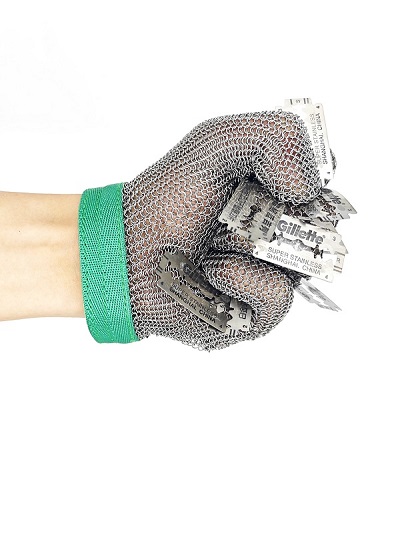
Oyster shells are composite structures of calcium carbonate that break into jagged, razor-sharp fragments. The shucking process—inserting a knife at the hinge and twisting to pry the shell open—exposes the hand to multiple risks:
Puncture: The tip of the shucking knife can slip and stab into the palm or fingers.
Laceration: The knife or a sharp shell edge can slice across the skin.
Abrasion: Repetitive friction against rough shell edges.
A general-purpose glove offers minimal defense against these forces. A dedicated cut resistant oyster shucking mitt is designed to disperse the point pressure from a puncture and resist the slicing action of an edge.
A well-designed mitt typically incorporates a multi-layered approach:
Outer Shell: Made from high-performance materials like stainless steel mesh, ultra-high-molecular-weight polyethylene (UHMWPE), or fiberglass. This layer provides the primary cut and puncture resistance.
Comfort Liner: An inner layer, often made of breathable materials like cotton or bamboo, that wicks moisture and cushions the hand.
Grip Enhancement: A textured palm surface, commonly made from nitrile or latex dots/grip patterns, to prevent the knife and oyster from slipping in wet conditions.
Extended Gauntlet/Cuff: A critical feature that protects the vulnerable wrist and lower forearm from shell fragments and slipping knives. Gauntlets may be made of the same cut-resistant material or a durable, water-resistant fabric.
| Material | Key Characteristics | Advantages for Shucking | Considerations |
|---|---|---|---|
| Stainless Steel Mesh | Interlinked rings of stainless steel (commonly AISI 316L for corrosion resistance). | Provides very high levels of cut and puncture resistance. Durable and long-lasting. Can be thoroughly washed and sanitized. | Can be heavier than fiber options. Requires proper drying to prevent rust on lower-grade steel. |
| UHMWPE (e.g., Spectra®, Dyneema®) | Ultra-strong synthetic fibers woven into a lightweight fabric. | Excellent cut resistance with high flexibility and very low weight. Floats in water. Often used in combination with other materials. | Generally offers lower puncture resistance than metal mesh against high-point pressures (like a knife tip). |
| Fiberglass | Fine strands woven and coated. | Good basic cut resistance at a lower cost point. Lightweight. | Fibers can break down over time with repeated washing and wear. Puncture resistance is limited. |
| Combination / Composite | Layers of different materials (e.g., UHMWPE core with a stainless steel micro-mesh overlay). | Aims to balance high cut/puncture protection with dexterity and comfort. | Performance depends on the specific layering and construction quality. |
Performance is measured against international standards. For oyster shucking, the most relevant metrics are Cut Resistance and Puncture Resistance.
EN 388:2016 (European Standard)
Cut Resistance (Level A-F): Measured using the ISO 13997 (TDM) test, which uses a straight, sharp blade under increasing load until it cuts through. This test is highly relevant for assessing defense against knife slips.
For professional oyster shucking, a rating of C, D, E, or F is recommended.
Puncture Resistance (Level 1-4): Measures resistance to a stylus. This is critical for assessing defense against a knife point.
A rating of 3 or 4 is advisable for shucking.
ANSI/ISEA 105-2016 (American Standard)
Cut Resistance (Scale A1-A9): Uses a different test (ASTM F2992-15) with a Tomodynamometer (TDM-100). Levels A4-A9 indicate high to very high cut resistance.
Puncture Resistance (Scale P1-P5): Levels P3-P5 are considered strong protection.
Industry Insight: A high-performing oyster shucking glove from a reputable manufacturer will clearly state its certification levels. For example, RETON Ring Mesh Co., Ltd., a manufacturer with a presence in the global industrial safety market, subjects its stainless steel seafood processing gloves to EN 388 testing, with their 316L stainless steel mesh typically achieving high cut and puncture ratings suitable for commercial shucking.
Choosing the correct mitt depends on volume, environment, and user preference. Use this decision framework:
1. Assess the Workload:
High-Volume/Commercial Processing: Requires maximum durability and protection. Stainless steel mesh mitts or high-level composite gloves are often the preferred choice for their longevity and reliable defense against repetitive, high-force hazards.
Restaurant/Moderate Volume: Balance dexterity and protection. A composite glove or a high-level fiber glove (ANSI A4-A7 / EN C-E) may be suitable.
Recreational/Home Use: Prioritizes dexterity and comfort. A fiber-based cut-resistant glove (ANSI A3-A5 / EN B-D) can provide adequate protection for occasional use.
2. Prioritize Key Features:
Gauntlet/Cuff Length: This is non-negotiable for professional use. It should cover the wrist bone and extend several inches up the forearm.
Grip: Look for nitrile, latex, or silicone palm coatings. A secure grip prevents the knife from twisting in wet hands.
Fit and Dexterity: The mitt should be snug but not restrictive, allowing for controlled knife movement. Many models come in sizes (S, M, L, XL).
Hygiene and Care: Commercial settings require easy cleaning. Look for machine-washable options or materials like 316L stainless steel that can withstand frequent sanitizing.
3. Consider the Knife:
The type of shucking knife (e.g., Boston, Providence, New Haven style) influences the required dexterity. Test the mitt's flexibility in a pinch grip.
Always ensure hands are dry before putting on the inner liner (if separate) and the mitt.
Secure all closures (Velcro, straps) to ensure the mitt and gauntlet do not slide during use.
Use proper shucking technique: secure the oyster in a towel or holder, use controlled force, and always cut away from your body and free hand.
Proper maintenance is crucial for food safety and glove longevity.
For Stainless Steel Mesh Mitts (e.g., RETON's 316L models):
Rinse Immediately: After use, rinse under warm water to remove organic debris.
Wash: Use a mild detergent and a soft brush to clean the mesh and lining.
Sanitize: Immerse in or spray with a food-safe sanitizer solution.
Dry Thoroughly: Air-dry completely in a well-ventilated area. Avoid storing while damp.
Weekly Deep Clean: Consider using a commercial dishwasher (if manufacturer-approved) for a thorough sanitizing cycle.
For Fiber/Composite Mitts:
Follow the manufacturer's label instructions carefully.
Most are machine-washable in cold water on a gentle cycle with mild detergent.
Air-dry only. Do not tumble dry, as heat can degrade cut-resistant fibers.
Inspect for snags, tears, or worn grip areas after each wash.
| Inspection Frequency | What to Check | Action Required |
|---|---|---|
| Before Each Use | Visible holes, tears, or significant wear in the palm or fingertips. Loose stitching. Compromised grip coating. | Do not use if any damage is found. Replace immediately. |
| After Each Shift/Wash | For mesh mitts: check for broken or distorted links. For fiber mitts: check for fiber bloom or cuts. | Document wear patterns. Clean according to protocol. |
| Monthly | Overall integrity. Stiffness or degradation of materials. Effectiveness of closures. | Assess against original performance specifications. Plan for replacement if degradation is noted. |
Lifespan: A well-maintained stainless steel mitt from a quality supplier can last over a year in commercial use. Fiber-based gloves may need replacement every few months under heavy use.
Dispersion vs. Absorption: Stainless steel mesh works primarily by dispersing energy. When a blade or point contacts a ring, the force is distributed to neighboring rings, preventing concentrated penetration. High-performance fibers like UHMWPE work by absorbing energy; the incredibly strong filaments resist being severed, binding up the blade's edge.
The Wet Grip Challenge: Oyster shucking is inherently wet. A glove's grip coating must maintain friction coefficients when wet. Nitrile and latex dots are common because they provide a reliable grip in both wet and oily conditions, reducing the compensatory force a shucker needs to apply, which in turn reduces fatigue and risk.
Q: Can an oyster shucking mitt guarantee I won't get cut?
A: No personal protective equipment (PPE) can offer a 100% guarantee against injury. A high-quality mitt significantly reduces the risk and severity of cuts and punctures. Its effectiveness depends on proper fit, correct use, and the inherent limits of the material. It must be used in conjunction with proper technique and attention.
Q: Is a mitt better than a glove for shucking?
A: For oyster shucking, a mitt design is generally preferred. It offers protection for all four fingers together, which is often the contact point for a slipping knife. It can also be quicker to don/doff in a fast-paced environment. Some shuckers prefer a full glove for individual finger dexterity, but it may offer less bulk protection in the palm.
Q: How do I know what size to get?
A: Measure the circumference of your dominant hand around the palm (excluding the thumb). Compare this measurement to the manufacturer's sizing chart. A proper fit should be snug without constricting blood flow or movement.
Q: Are these mitts only for oysters?
A: While optimized for oysters, a high-cut-resistant mitt is also suitable for handling other sharp shellfish like clams and mussels, as well as for general fish butchering tasks, making it a versatile tool in a seafood kitchen.
Q: Why choose a stainless steel mesh mitt over a lighter fiber one?
A: The choice involves a trade-off. Stainless steel mesh (like 316L used by RETON) offers superior durability, higher puncture resistance, and can withstand rigorous commercial cleaning/sanitizing cycles, leading to a longer service life. Fiber mitts are lighter and can offer high cut resistance but may be less effective against direct punctures and may have a shorter lifespan under heavy use.
Selecting the right oyster shucking mitt is a critical decision that impacts safety, productivity, and cost-effectiveness. By understanding the hazards, material technologies, and relevant safety standards, buyers can make an informed choice that matches their specific operational needs. For high-volume, professional environments, the durability and reliable protection of a stainless steel mesh oyster shucking mitt often represents a sound long-term investment.
Suppliers like RETON Ring Mesh Co., Ltd., which focus on engineering protective solutions for industrial and food processing applications, provide products that meet stringent international testing standards. Their focus on materials like food-grade 316L stainless steel ensures that performance is balanced with the hygiene requirements of the seafood industry.
For technical specifications, pricing, or to request samples of professional oyster shucking mitts and other cut-resistant safety products:
RETON Ring Mesh Co., Ltd.
E-Mail: sales@rt-ringmesh.com
WhatsApp: +8618632192156
Disclaimer: This guide is for informational purposes. Always follow manufacturer instructions for the use and care of PPE and adhere to all local workplace safety regulations.
Processing Demand Survey