
RETON Ring Mesh Co., Ltd.A Professional, Reliable And Experienced Metal Products Manufacturer
+86-18632192156 sales@rt-ringmesh.com

Handling oysters requires force, control, and safety. Sharp shells, sudden slips, and repetitive opening work can quickly lead to hand injuries if the right protection is not used. That is why oyster shucking gloves are widely used by seafood processors, oyster farms, restaurants, fish markets, and home seafood enthusiasts.
Unlike general kitchen gloves, oyster shucking gloves are designed to help protect the hand that holds the oyster while maintaining grip in wet conditions. For importers, distributors, and professional seafood businesses, selecting the correct glove type can improve worker safety, productivity, and user confidence.
This guide explains how to choose oyster shucking gloves, compare materials, avoid common buying mistakes, and match the right glove to different seafood work environments.
RETON RING MESH CO., LTD. supplies protective gloves for seafood and food-processing industries with OEM manufacturing and export service support.
Mobile: +86-18632192156
E-Mail: sales@rt-ringmesh.com
Oyster shucking gloves are protective gloves used during oyster opening and shell handling. They help reduce cuts, punctures, and abrasion risks caused by shells or shucking knives.
They are commonly used in:
Oyster farms
Seafood processing plants
Restaurants
Raw bars
Fish markets
Catering kitchens
Home seafood preparation
The glove is typically worn on the hand holding the oyster, while the other hand uses the shucking knife.
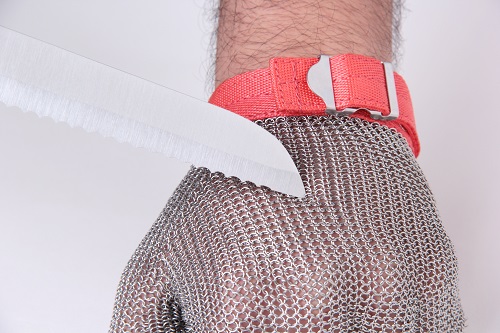
Oyster shells are uneven, sharp, slippery, and hard to grip. During opening, pressure from the knife can suddenly release, increasing injury risk.
Helps reduce shell cuts and puncture accidents.
Useful when oysters are wet, muddy, or icy.
Workers often handle oysters faster when hand protection is reliable.
Many professional gloves are built for repeated use.
Important for restaurants and seafood lines opening many oysters daily.
| Glove Type | Material | Protection Level | Grip in Wet Conditions | Typical User |
|---|---|---|---|---|
| Stainless Steel Mesh Glove | Stainless steel rings | High | Medium | Seafood factories, heavy-duty use |
| Cut Resistant Fiber Glove | HPPE / engineered fiber | Medium-High | High | Restaurants, kitchens |
| Latex-Coated Safety Glove | Textile + latex coating | Medium | High | Light shell handling |
| Rubber Utility Glove | Rubber/PVC | Low-Medium | High | Cleaning & handling only |
For repeated commercial oyster opening, many buyers choose oyster shucking gloves with cut-resistant fiber or stainless steel protection.
Home use: lightweight cut-resistant glove
Restaurant use: grip-focused glove
Factory use: stainless steel or heavy-duty cut resistant glove
Wet shell handling often requires textured surfaces or coated palms.
Workers need finger control for knife positioning and shell rotation.
Seafood businesses often need gloves that are easy to rinse and sanitize.
Proper fit improves control and reduces fatigue.
Useful during sorting, harvesting, washing, and opening.
Supports worker safety during high-output shell opening lines.
Helps kitchen staff open oysters during service hours.
Useful for preparing shellfish orders quickly.
Safer option for occasional oyster preparation.
These may help cleanliness but do not provide cut protection.
Too much bulk can reduce safe knife handling.
A glove that slips on wet shells increases accident risk.
Loose gloves reduce precision; tight gloves cause discomfort.
Seafood residue requires regular sanitation and drying.
Provide clear details to receive accurate quotations.
“We need oyster shucking gloves for restaurant and seafood wholesale customers. Cut resistant type preferred, sizes S/M/L/XL, logo label required, quantity 2,000 pairs. Please quote FOB price, MOQ, lead time, and packaging.”
What protection material is used?
Is the glove washable?
Are multiple sizes available?
Can you supply OEM branding?
What is the carton quantity?
What is lead time for repeat orders?
Textured coatings can improve handling of wet shells.
Higher protection should still allow finger movement.
Important for restaurant staff using gloves for extended shifts.
Longer cuffs may add wrist protection during shell handling.
Heavy commercial users should evaluate wear life.
Common packaging options:
Individual retail header card
Poly bag pair packing
Color box set
Bulk export cartons
OEM barcode labeling
This is useful for distributors, seafood supply stores, and retail channels.
RETON RING MESH CO., LTD. supplies protective glove products for food and industrial sectors.
Advantages for buyers:
Experience in protective glove manufacturing
Stainless steel mesh glove solutions available
OEM/private label support
Export packaging capability
Bulk order supply for distributors
Responsive communication for custom projects
Mobile: +86-18632192156
E-Mail: sales@rt-ringmesh.com
No glove should be considered fully knife-proof, but many provide significant cut resistance to reduce injury risk.
Usually the hand holding the oyster wears the glove.
Many types are washable. Follow supplier care instructions.
For heavy-duty commercial use, stainless steel mesh can be a strong option. For restaurant speed and comfort, fiber gloves are also popular.
Many users buy one protective glove, but pairs are also common.
oyster shucking gloves
best gloves for oyster shucking
oyster opening cut resistant gloves
seafood shucking gloves wholesale
stainless steel oyster gloves
oyster knife safety gloves
restaurant oyster gloves
Choosing the right oyster shucking gloves depends on grip, protection level, comfort, and cleaning requirements. Buyers who match glove type to real seafood workflows usually improve safety and efficiency while reducing hand injuries.
For restaurants, seafood processors, distributors, and private label buyers, RETON RING MESH CO., LTD. offers practical glove solutions with OEM service and export support.
Contact:
Mobile: +86-18632192156
E-Mail: sales@rt-ringmesh.com
Processing Demand Survey