
RETON Ring Mesh Co., Ltd.A Professional, Reliable And Experienced Metal Products Manufacturer
+86-18632192156 sales@rt-ringmesh.com

Chainmail is a flexible metal mesh made by linking thousands of small metal rings into a continuous pattern. It is used in armor, industrial protection systems, architectural design, fashion accessories, and decorative metalwork.
Understanding how to make chainmail helps you learn both traditional handcraft techniques and modern industrial production methods.
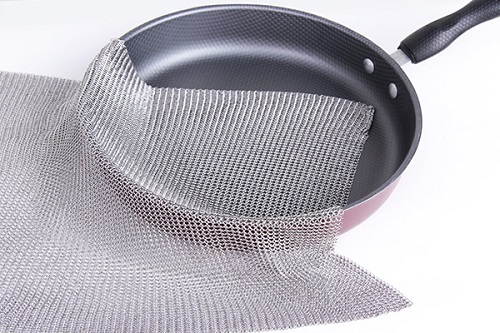
Chainmail (or chain mail) is a structure made from interlocking metal rings arranged in a repeating pattern.
It is known for:
High flexibility
Strong tensile structure
Shock resistance
Expandable mesh design
Common materials include:
Stainless steel wire (most durable)
Aluminum wire (lightweight)
Carbon steel wire (strong but heavier)
Copper or brass wire (decorative use)
For handmade chainmail:
Pliers (two pairs)
Wire cutter
Mandrel or rod (for shaping rings)
Gloves (to protect hands)
For industrial production:
Wire forming machine
Ring cutting machine
Welding equipment (optional)
Assembly system
The first step is creating uniform metal rings.
Wrap wire tightly around a rod
Cut into individual rings
Use automated coil forming machines
Produce consistent ring diameter
Each ring must be ready for joining:
Open rings slightly using pliers
Ensure smooth edges for easy assembly
The most common pattern is 4-in-1 weave, where each ring connects to four others.
One ring connects to four surrounding rings
Creates a flexible mesh sheet
Pattern repeats continuously
Continue linking rings row by row:
Add new rings horizontally
Build consistent layers
Maintain even tension
This forms a flexible chainmail sheet.
Close each ring tightly using pliers
Ensure no gaps remain
Welding or compression locking (optional)
Improves strength for heavy-duty applications
Depending on use, chainmail can be shaped into:
Armor shirts or sleeves
Protective industrial mesh panels
Decorative sheets
Fashion accessories
Most widely used pattern
Balanced strength and flexibility
Denser structure
Higher protection level
Smooth surface appearance
Common in fashion and decoration
In modern factories, chainmail is produced at scale:
Metal wire is selected and prepared.
Automated machines create uniform rings.
Rings are linked in structured patterns.
Options include:
Polishing
Galvanizing
Coating
Mesh is cut into required sizes or products.
Machine guards
Safety barriers
Industrial shielding
Chainmail dresses
Metal purses
Accessories
Facade decoration
Metal curtain walls
Medieval protective gear
Reenactment costumes
Flexible and bendable
High strength-to-weight ratio
Durable under tension
Customizable design patterns
Uneven ring sizes
Loose ring closure
Incorrect weaving pattern
Poor material selection
Learning how to make chainmail involves understanding wire forming, ring assembly, and weaving patterns. Whether handmade or industrially produced, chainmail remains a versatile structure used across protection, fashion, and engineering industries.
How make chainmail, chainmail making process, chain mail weaving guide, DIY chainmail tutorial, chainmail ring mesh manufacturing, metal chainmail structure, how to weave chainmail armor, chainmail production method, chainmail mesh factory process
Processing Demand Survey