
RETON Ring Mesh Co., Ltd.A Professional, Reliable And Experienced Metal Products Manufacturer
+86-18632192156 sales@rt-ringmesh.com

When buyers ask how much do chainmail gloves weigh, they are usually comparing different types of stainless steel chain mesh gloves for safety, comfort, and efficiency. The weight of steel chain mesh gloves directly affects user fatigue, flexibility, and protection level, making it an important factor in industries such as meat processing, fish cutting, and industrial manufacturing.
In general, the weight of a stainless steel chain mesh glove ranges from 150 grams to 400 grams per glove, depending on mesh density, ring size, wire thickness, and glove size. This article explains all the key factors that influence weight, provides technical specifications, and includes comparison tables and FAQs to support decision-making and improve search visibility.
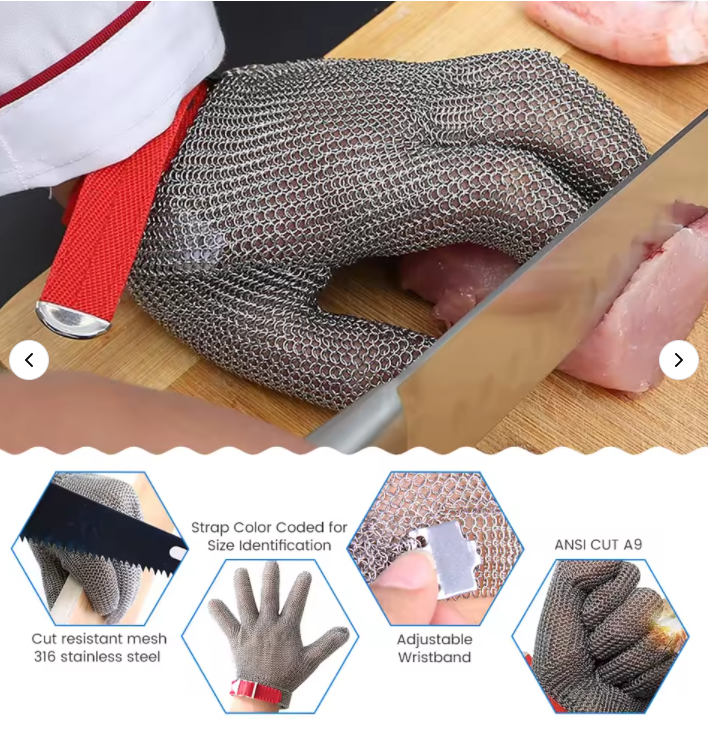
The weight of steel chain mesh gloves is not fixed. It depends on several technical and structural factors.
Thicker wire increases glove weight but also improves durability.
0.4 mm wire → lighter gloves
0.5 mm wire → standard balance
0.6 mm wire → heavier, higher protection
Ring size determines how tightly the mesh is constructed.
Small rings → higher density → heavier weight
Large rings (steel large mesh gloves) → lighter weight
Larger gloves naturally require more rings.
Small size (S) → less material
Extra-large (XL) → more material, heavier
Different stainless steel grades have slight weight differences.
304 stainless steel → standard weight
316L stainless steel → slightly denser
Below is a general weight range for different types of stainless steel chain mesh gloves:
| Glove Type | Weight (Per Glove) | Features |
|---|---|---|
| Lightweight chainmail gloves | 150–200 g | Better flexibility, lower fatigue |
| Standard steel chain mesh gloves | 200–300 g | Balanced protection and comfort |
| Heavy-duty chainmail gloves | 300–400 g | Maximum cut resistance |
| Steel large mesh gloves | 180–250 g | Larger rings, lighter feel |
Understanding technical parameters helps explain why weight varies among steel chain mesh gloves.
| Specification | Typical Value |
|---|---|
| Material | Stainless Steel 304 / 316L |
| Wire Diameter | 0.4 mm – 0.6 mm |
| Ring Inner Diameter | 3 mm – 4 mm |
| Mesh Type | 4-in-1 interlocking |
| Glove Weight | 150 g – 400 g |
| Corrosion Resistance | High |
| Cut Resistance Level | High (EN 1082 compliant) |
These specifications are standard for most stainless steel chain mesh gloves used in industrial and food-grade environments.
Weight is a key factor when comparing steel chain mesh gloves with other protective gloves.
| Glove Type | Average Weight | Cut Resistance | Comfort Level | Typical Use |
|---|---|---|---|---|
| Chainmail gloves | 150–400 g | Very high | Moderate | Meat cutting, industrial safety |
| Kevlar gloves | 50–150 g | Medium | High | Light-duty cutting |
| HPPE gloves | 40–120 g | Medium | High | General handling |
| Fabric gloves | 30–80 g | Low | Very high | Basic protection |
Insight: While stainless steel chain mesh gloves are heavier, they provide significantly higher cut protection compared to textile alternatives.
Heavier gloves can cause fatigue during long shifts, especially in repetitive cutting tasks.
Heavier gloves often mean:
Thicker wire
Stronger rings
Better cut resistance
Lighter gloves improve hand movement, while heavier gloves may feel more rigid.
Different industries prioritize weight differently:
Food processing → balance between weight and hygiene
Industrial cutting → higher weight for safety
Textile cutting → lighter gloves for precision
Weight: 150–200 g
Better comfort
Suitable for low to medium risk
Weight: 300–400 g
Higher durability
Suitable for high-risk environments
Selecting the right stainless steel chain mesh glove depends on your application.
Type of cutting tools used
Duration of work shifts
Required safety level
Hand size and fit
For long working hours → choose lighter gloves
For high-risk cutting → choose heavier gloves
| Industry | Recommended Weight | Reason |
|---|---|---|
| Meat processing | 200–300 g | Balanced protection |
| Fish processing | 180–250 g | Flexibility needed |
| Glass handling | 250–350 g | Higher protection |
| Textile cutting | 150–220 g | Precision work |
Most stainless steel chain mesh gloves weigh between 150 g and 400 g, depending on design and materials.
Generally, heavier gloves offer higher cut resistance because they use thicker wire and denser mesh.
Yes, steel large mesh gloves typically weigh less due to larger ring sizes and reduced material density.
They are durable for moderate use, but heavy-duty gloves provide better protection in high-risk environments.
Yes, larger gloves require more rings and therefore weigh more.
Yes, lighter gloves can reduce fatigue and improve efficiency during long working hours.
Manufacturers of steel chain mesh gloves must balance three key factors:
Wire thickness → increases strength but adds weight
Ring density → improves protection but reduces flexibility
Material grade → affects corrosion resistance and durability
The optimal design ensures that the glove provides sufficient protection without excessive weight that could reduce usability.
Understanding how much chainmail gloves weigh helps businesses choose the right protective equipment for their operations. While stainless steel chain mesh gloves are heavier than fabric alternatives, their superior cut resistance makes them essential in high-risk environments.
By considering factors such as wire diameter, ring size, and application needs, users can select the most suitable steel chain mesh gloves for both safety and comfort.
Processing Demand Survey