
RETON Ring Mesh Co., Ltd.A Professional, Reliable And Experienced Metal Products Manufacturer
+86-18632192156 sales@rt-ringmesh.com

If you are searching for how to make chainmail gloves, understanding the materials, weaving techniques, and safety considerations is essential. Chainmail gloves are widely used in industries such as meat processing, metal handling, and protective equipment manufacturing.
RETON Ring Mesh Co., Ltd. provides ring mesh solutions and technical support for customers who need reliable chainmail products or want to understand the production process.
E-Mail: sales@rt-ringmesh.com
WhatsApp: +8618632192156
This guide explains the step-by-step process, required tools, material options, and technical insights to help you make functional chainmail gloves.
Chainmail gloves are protective gloves made from interlinked metal rings. The structure distributes force and reduces the risk of cuts and punctures.
They are commonly used in:
Food processing (cut-resistant gloves)
Butchery and fish handling
Industrial safety applications
Historical reenactment and costume production
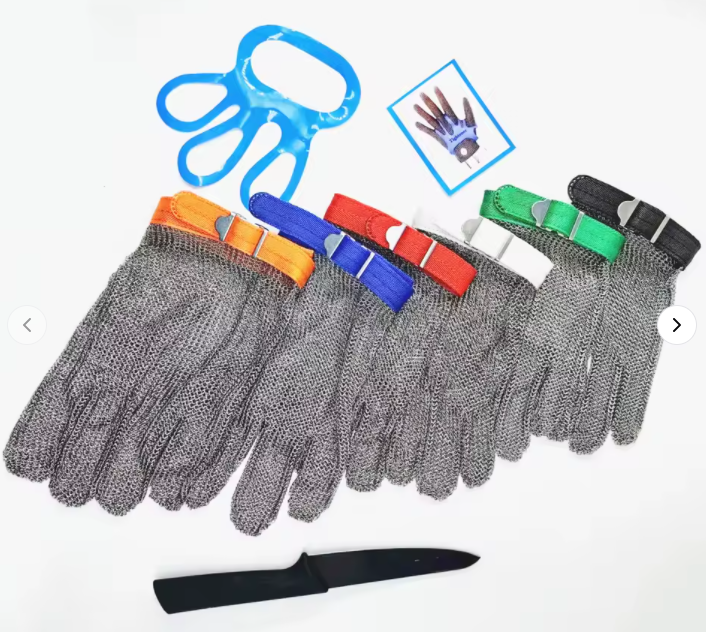
Before starting, selecting the right material is critical for performance and durability.
| Material Type | Features | Recommended Use |
|---|---|---|
| Stainless Steel (304/316) | Corrosion-resistant, durable | Food industry, industrial use |
| Mild Steel | Easy to work with, lower cost | Practice and hobby projects |
| Aluminum | Lightweight, easy to weave | Costume and decorative use |
| Titanium | Strong and lightweight | Specialized applications |
To make chainmail gloves efficiently, prepare the following tools:
Round nose pliers
Flat nose pliers
Wire cutters
Mandrel (rod for forming rings)
Drill (manual or electric for coiling wire)
Wrap metal wire tightly around a mandrel
Use a drill for consistent coils
Cut the coil into individual rings
Tip: Keep ring size consistent for uniform mesh quality.
The most common pattern is the 4-in-1 European weave, where each ring connects to four others.
Other patterns include:
6-in-1 weave (denser, stronger)
8-in-1 weave (high protection, less flexibility)
Open a ring using pliers
Connect it to four closed rings
Close the ring securely
Continue expanding into a sheet
Form a flat mesh sheet for the palm
Gradually shape around the hand
Create separate sections for fingers
Important: Finger sections require smaller ring diameters for flexibility.
Connect finger sections to the palm
Add thumb section separately
Ensure all joints are tightly closed
Extend mesh to cover wrist
Add a strap or elastic band for secure fitting
| Parameter | Typical Range |
|---|---|
| Ring Diameter | 3 mm – 10 mm |
| Wire Thickness | 0.5 mm – 1.2 mm |
| Mesh Density | 4-in-1 / 6-in-1 |
| Material Grade | SS304 / SS316 |
| Weight per Glove | 200 g – 600 g |
| Cut Resistance Level | ANSI A5 – A9 (varies) |
| Weave Type | Flexibility | Protection Level | Weight | Difficulty |
|---|---|---|---|---|
| 4-in-1 | High | Medium | Light | Easy |
| 6-in-1 | Medium | High | Medium | Moderate |
| 8-in-1 | Low | Very High | Heavy | Difficult |
Always wear protective eyewear when cutting rings
Ensure rings are fully closed to prevent gaps
Test gloves before use in high-risk environments
Use stainless steel for food-related applications
Using inconsistent ring sizes
Leaving gaps between rings
Choosing the wrong weave for the application
Ignoring hand ergonomics
Q1: Are chainmail gloves completely cut-proof?
No. They significantly reduce risk but should be used alongside proper safety practices.
Q2: What is the best material for food processing?
Stainless steel (SS304 or SS316) is commonly used due to corrosion resistance and hygiene standards.
Q3: How long does it take to make one glove?
For beginners, it may take 8–15 hours depending on complexity.
Q4: Can chainmail gloves be machine cleaned?
Yes, stainless steel gloves can typically be washed and sanitized easily.
Q5: Is it better to buy or make chainmail gloves?
For industrial use, professionally manufactured gloves are recommended for consistent quality and compliance.
RETON Ring Mesh Co., Ltd. supplies chainmail ring mesh and finished products for industrial and commercial applications. The company supports:
Custom ring sizes and mesh structures
Stainless steel ring mesh production
Technical guidance for manufacturing and application
Contact:
E-Mail: sales@rt-ringmesh.com
WhatsApp: +8618632192156
Understanding how to make chainmail gloves involves mastering materials, ring production, and weaving techniques. While manual production is suitable for learning and small-scale projects, industrial applications benefit from consistent manufacturing and tested specifications.
By following the steps and technical guidance above, you can create functional chainmail gloves or make informed sourcing decisions for your project.
Processing Demand Survey