Stainless Steel Mesh Apron for Meat Processing Safety: Full-Torso Protection in Demanding Work Environments
In meat processing facilities, protecting hands is only part of the safety strategy. Workers also face risks to the torso and upper body, especially during high-speed cutting, deboning, and carcass handling. A stainless steel mesh apron provides an additional layer of protection, helping reduce injuries caused by accidental knife contact.
This article focuses specifically on stainless steel mesh aprons for meat processing safety, highlighting their structure, advantages, and proper use—distinct from glove-focused protection.
Why Use a Stainless Steel Mesh Apron?
While gloves protect the hands, the torso remains exposed during many tasks. A mesh apron helps address this gap.
Common Risk Areas:
Abdomen and chest during knife slips
Upper thighs during downward cutting motions
Side body exposure when handling large cuts
A stainless steel mesh apron acts as a barrier between sharp tools and the body, improving overall workplace safety.
What Is a Stainless Steel Mesh Apron?
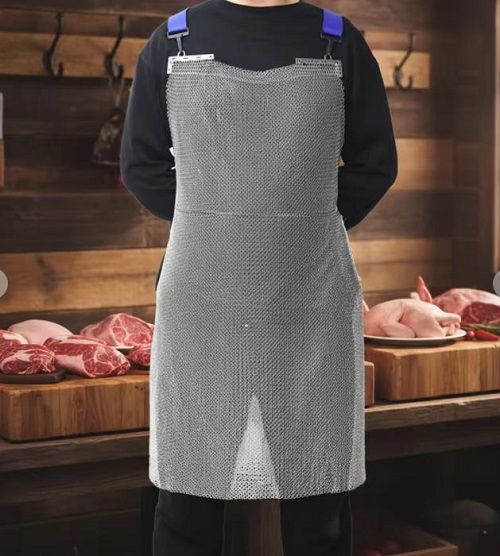
A stainless steel mesh apron is made from interconnected metal rings, similar to chainmail, forming a flexible protective garment worn over clothing.
Key Characteristics:
Covers front torso and sometimes upper legs
Flexible enough for movement
Resistant to cuts and punctures
Suitable for repeated cleaning and sanitization
Key Features for Meat Processing Safety
1. Extended Coverage
Unlike gloves, aprons protect a larger surface area:
This is especially useful in industrial meat cutting environments.
2. Cut and Puncture Resistance
The dense ring mesh helps:
3. Adjustable Fit System
Most aprons include:
Shoulder straps
Waist belts
Adjustable buckles
This ensures:
4. Hygienic Construction
Made from food-grade stainless steel (commonly 304 or 316):
Types of Stainless Steel Mesh Aprons
| Type | Description | Application |
|---|
| Standard Apron | Covers chest to thigh | General meat processing |
| Long Apron | Extended lower coverage | Heavy-duty cutting tasks |
| Vest-Style Apron | Wrap-around protection | High-risk environments |
| Split-Leg Apron | Allows more mobility | Active movement tasks |
How to Choose the Right Mesh Apron
1. Coverage Area
Select based on risk level:
2. Weight and Comfort
Balance protection with comfort depending on job requirements.
3. Strap and Fastening System
Look for:
Durable adjustable straps
Secure waist and shoulder support
Quick-release options for safety
4. Compatibility with Other PPE
Mesh aprons are often used together with:
Advantages Over Fabric or Plastic Aprons
| Feature | Stainless Steel Mesh Apron | Fabric/Plastic Apron |
|---|
| Cut Resistance | High | Low |
| Durability | Long-lasting | Moderate |
| Hygiene | Easy to sanitize | May absorb liquids |
| Protection Level | Industrial-grade | Basic |
Proper Usage Guidelines
To maximize safety:
Wear the apron securely fastened
Ensure full coverage of exposed areas
Combine with other PPE where needed
Avoid loose positioning that may shift during work
Cleaning and Maintenance
Cleaning Process:
Rinse with warm water
Wash using food-safe detergent
Sanitize with approved disinfectant
Air dry completely
Maintenance Tips:
Inspect regularly for damaged rings
Replace if structural integrity is compromised
Store in a clean, dry area
Common Mistakes to Avoid
❌ Using Only Gloves Without Body Protection
Torso injuries can still occur without an apron.
❌ Choosing Incorrect Size
Improper fit reduces effectiveness and comfort.
❌ Ignoring Regular Inspection
Damaged mesh reduces protective capability.
❌ Wearing Loose or Unsecured Aprons
Movement can expose unprotected areas.
Applications in Meat Processing
Stainless steel mesh aprons are commonly used in:
Slaughterhouses
Meat cutting and deboning lines
Poultry processing plants
Fish and seafood preparation
They are especially important in high-volume industrial operations.
Frequently Asked Questions (FAQs)
1. Are mesh aprons cut-proof?
They are highly cut-resistant but not completely cut-proof.
2. Can they be worn all day?
Yes, if properly fitted and adjusted for comfort.
3. Are they suitable for food environments?
Yes, stainless steel is hygienic and easy to sanitize.
4. Do they restrict movement?
Modern designs allow flexibility while maintaining protection.
5. How long do mesh aprons last?
With proper care, they have a long service life.
Conclusion
A stainless steel mesh apron for meat processing safety provides essential protection for the torso, complementing hand protection and improving overall workplace safety. With strong cut resistance, durability, and hygienic properties, it is a practical solution for demanding meat processing environments.
Choosing the right design, ensuring proper fit, and maintaining the apron correctly will help maximize both safety and efficiency in daily operations.

