
RETON Ring Mesh Co., Ltd.A Professional, Reliable And Experienced Metal Products Manufacturer
+86-18632192156 sales@rt-ringmesh.com

While general safety gear provides baseline protection, industries facing extreme cutting hazards require specialized solutions. Chainmail cutting gloves represent the pinnacle of engineered hand protection, designed not just to resist incidental contact but to withstand direct, sustained blade pressure. This guide moves beyond basic comparisons to explore the engineering principles, material innovations, and application-specific considerations that define modern chainmail glove performance in 2024. We will dissect how these gloves function under real-world stress and provide a framework for evaluating suppliers, including a focus on technical manufacturing capabilities from companies like RETON Ring Mesh Co., Ltd. (Contact: +8618632192156, Email: sales@rt-ringmesh.com).
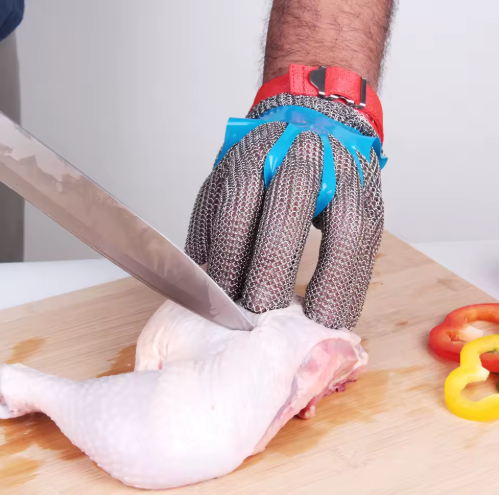
The effectiveness of a chainmail glove lies in its precise architecture. It is a system, not just a material.
Standard Grades (304, 316 Stainless): Offer excellent corrosion resistance for wet environments (food processing, marine applications). Their hardness provides good general cut resistance.
High-Carbon & Alloy Steels: Used in gloves for metalworking and recycling. They are often heat-treated to achieve a higher surface hardness (Rockwell C scale), making them more resistant to abrasion and cuts from hardened steel edges.
Plating & Coatings: Some manufacturers apply nickel or Teflon coatings to reduce friction (allowing blades to slide off more easily) and enhance corrosion resistance.
Ring Diameter & Wire Gauge: Smaller rings made from thicker wire create a denser, heavier, and more protective mesh. Larger, lighter rings offer better dexterity and airflow.
Weave Pattern (European 4-in-1, 6-in-1): The classic "4-in-1" pattern (each ring links four others) is the industry standard for balance. A "6-in-1" weave is denser and slightly more protective but less flexible.
Rivet vs. Welded vs. Butted Links:
Butted Links: Ends of the wire are simply cut and pressed together. Most common, cost-effective, but can snag and pull apart under extreme force.
Riveted Links: A small rivet pins the ends. Historically strong but can be a point of friction.
Welded/Pressure-Welded Links (Modern Standard): The ends are fused without filler material, creating a smooth, very strong joint that minimizes snag points. This is the mark of a premium industrial glove.
The metal mesh is only part of the solution. The true innovation is in its integration:
Back-of-Hand Coverage: Full mesh, partial mesh (finger guards only), or articulated panels for knuckle mobility.
Palm Construction: A cut-resistant liner (e.g., UHMWPE like Spectra® or Dyneema®, or aramid like Kevlar®) is sewn or bonded beneath a leather, nitrile, or PVC coating. This tri-layer system provides cut resistance, grip, and abrasion protection.
Cuffs & Closure: A secure fit is critical. Options include knit wrists, wide storm cuffs (to contain debris), and adjustable straps.
Different industries present unique challenges that generic gloves cannot address optimally.
| Industry / Primary Hazard | Critical Glove Requirements | Recommended Specification Focus | Notes & Trends |
|---|---|---|---|
| High-Volume Meat & Poultry Deboning | Repetitive cutting motions, sharp boning knives, wet/fatty environment, hygiene. | Lightweight mesh (small rings), high corrosion resistance (316SS), smooth welded links, perforated PVC/nitrile palm for drainage and grip. | Focus on easy cleaning and rapid donning/doffing. Antimicrobial liners are a growing trend. |
| Automotive & Aerospace Composite Trimming | Extremely sharp carbon/glass fiber edges, punctures from splinters, need for fine dexterity. | Fine-gauge mesh for dexterity, puncture-resistant palm padding, snug fit, often fingerless design for fingertips. | Gloves are often part of a PPE system with protective sleeves. |
| Metal Stamping & Blanking | Handling sharp-edged sheet metal blanks, high risk of severe slicing cuts, abrasion. | Heavy-gauge welded mesh, high-hardness steel, full-wrap finger protection, reinforced leather palm. | Durability and protection are prioritized over ultra-lightweight design. |
| Glass & Mirror Handling | Long, razor-sharp edges, need for grip on smooth surfaces, protection against shattering. | Full-hand mesh coverage, suede or specialized high-grip palm coating, excellent wrist closure to prevent glass slivers from entering. | |
| Waste & Recycling (Sorting Lines) | Unknown sharp hazards (metal, glass), puncture risk, need for balance of protection and tactility. | Mid-weight mesh, puncture-resistant liner throughout palm, long cuff design, economical replaceable model. | Cut resistance (Level D-E) is often sufficient; emphasis is on value and coverage. |
When sourcing chainmail cutting gloves, especially in bulk for industrial use, a systematic evaluation of the manufacturer is as important as evaluating the product sample.
In-House Manufacturing Depth:
Ask: Do you control wire drawing, ring forming, weaving, and welding in-house?
Why it matters: Ensures consistent quality, traceability, and cost control. Suppliers like RETON Ring Mesh Co., Ltd., which manage the full process, can guarantee stricter tolerances and faster customization.
Certification & Testing Transparency:
Ask: Can you provide test reports from independent labs (e.g., SGS, Intertek) for the specific model, showing EN388:2016 Level XXXX [C/D/E] results?
Why it matters: Validates marketing claims. The ISO13997 cut level (A-F) is the most critical data point.
Customization Capability:
Scope: True customization goes beyond size and color. It includes ring size/gauge, palm material combination, cuff length/type, and even specialized patterns for unique tools.
Supplier Example: RETON's model supports this level of technical customization, which is essential for OEMs or companies with unique processes.
Technical Support & Problem-Solving:
Evaluate: Does the sales contact (e.g., +8618632192156) connect you to engineers? Can they analyze a failed glove and suggest a material or design improvement?
Low-Cost Options: Often use butted links, thinner wire, generic palm materials. Suitable for low-frequency, predictable hazards.
Mid-Range Value (e.g., RETON's offering): Typically feature welded links, better-grade steels, and certified composite palms. Offers the best balance of performance and total cost of ownership for most industrial applications.
Premium Brands: Invest in proprietary alloys, advanced ergonomic patterning, and branded high-tech fibers. Justified for extreme hazards or where dexterity loss is prohibitively expensive.
A glove is only effective if worn and used correctly. Training must cover:
Donning/Doffing Procedure: Ensuring proper fit without catching skin on rings.
Inspection Protocol: How to check for broken links, torn stitching, or degraded palm coating before each use.
Limitation Awareness: Emphasizing that the gloves protect against cuts but not heavy crushing or extreme heat.
Cleaning: Follow manufacturer guidelines. Ultrasonic cleaners are effective for deep cleaning welded mesh without damage.
Repair: Some high-end gloves offer repair services for torn liners or minor damage.
End of Life: Establish a clear policy for decommissioning gloves with compromised integrity. Do not attempt to repair broken chainmail links in the field.
Hybrid Materials: Integration of engineered fabrics like chainmail with areas of soft, impact-absorbing materials (e.g., D3O®) for comprehensive hand protection.
Ergonomic Data: Use of motion capture and pressure mapping to design gloves that reduce hand fatigue during repetitive tasks.
Sustainability: Development of easier-to-recycle metal alloys and bio-based palm coatings without compromising performance.
RETON Ring Mesh Co., Ltd. positions itself effectively within the technical framework outlined above. As a direct manufacturer, their value proposition centers on:
Control Over Specifications: They can adjust the fundamental variables—wire grade, ring size, weave density—to meet a specific cut-resistance target (e.g., aiming for a consistent ISO Cut Level D).
Customization as Standard: Their business model accommodates batch orders tailored to a client's unique hazard profile and tooling.
Direct Technical Dialogue: Engaging with them (sales@rt-ringmesh.com) is intended to be a collaborative process to solve a safety problem, not just a product transaction.
For a technical consultation or to request test samples based on your specific hazard analysis:
Contact: +8618632192156
Email: sales@rt-ringmesh.com
Selecting chainmail cutting gloves in 2024 requires moving past generic ratings and marketing. It demands an understanding of the specific mechanical hazard, the engineering of the glove system, and the capability of the supplier to deliver a solution that integrates seamlessly into the work process. By focusing on the metallurgy, construction, and application-fit—and by engaging with technical manufacturers who can support this analysis—safety managers can make informed, defensible investments in hand protection that genuinely mitigate risk.
The final step is always validation. Use the framework here to define your needs, then source physical samples from shortlisted suppliers like RETON for in-house trials under controlled, realistic conditions. The right glove should feel not like a barrier, but like a capable and durable extension of the worker's own hands.